
Brine Disposal Methods: Ocean Outfall, Injection Wells, Evaporation Ponds and Sewer Discharge Compared
By Sean Alford, Permitting Plus
There are five ways to dispose of brine: discharge it to the sea or a river, inject it into a deep well, evaporate it in a pond, send it to a sewer, or spread it on land. A sixth option, recovery of the salt and chemicals from the brine so there is no waste left to dispose of, is becoming the first choice for large plants.
Which one you can use is not a matter of preference. It is decided by the volume of brine, what is dissolved in the brine, the geology and climate of the site, and above all by the regulator who will permit it. Choose the method before you check those four things and you will design the plant twice.
Permitting Plus provides project management, engineering, procurement, and construction for brine management projects at desalination plants, industrial water users, and mining operations in the United States and worldwide, together with the permits they need. Brine disposal is one part of brine management, and usually the part that decides the rest. This article compares the disposal methods the way we compare them for clients: by what each one requires, where it works, and where it fails. Our brine management page explains how the full process works.
Table of Contents
What brine disposal has to solve
Brine is the concentrated salt water produced when a desalination plant makes fresh water from seawater, or when an industrial process rejects dissolved solids. Reverse osmosis systems make it. So do cooling towers, water softeners, and mining and chemical plants. It is not usually classified as hazardous. It is regulated because of what it does where it goes: raises salinity, lowers dissolved oxygen, and carries whatever else was in the process.
Volume and salinity
Volume is the first critical number, and it decides the scale of the method. A small industrial reverse osmosis system might produce a few hundred cubic meters of concentrate a day. A large coastal desalination plant produces tens of thousands. On our project in Indonesia, the seawater plant rejects tens of thousands of cubic meters a day at about one and a half times the salinity of seawater. No pond, sewer, or single well takes that much brine. The realistic options were ocean outfall or full recovery of the waste stream.
What else is in the brine
Salinity is only the first parameter. Reject brine carries calcium, magnesium, sulfate, silica, and bicarbonate from the seawater, plus residual antiscalant and cleaning chemicals from the plant. Industrial and mining brines can carry heavy metals, organics, or naturally occurring radioactive materials from the formation they came from. Each of these can close off a route on its own, and each is a critical question for the environmental regulator. A brine with elevated heavy metals is not going to a sewer, and it may not be going to the sea either.
That is why an independent laboratory analysis of the brine comes before any decision on the route. On our desalination project in Indonesia the analysis showed calcium, magnesium, sulfate, and silica at levels that required a purification stage, and those numbers decided the treatment systems and, in the end, the route.
Brine disposal methods compared
| Method | How it works | Where it fits | Main permit | Where it fails |
|---|---|---|---|---|
| Ocean outfall | Brine returned to the sea through a diffuser that mixes it quickly | Coastal plants of any size | Surface water discharge permit with salinity limits and a mixing zone | Sensitive marine habitat, poor mixing, tightening limits |
| Surface water discharge | Brine released to a river or estuary, usually after dilution | Small inland volumes with a large receiving water | Surface water discharge permit | Freshwater ecology, low flow seasons |
| Deep well injection | Brine pumped into a deep, confined rock formation | Inland plants over suitable geology | Underground injection well permit | Unsuitable geology, seismic risk, cost of drilling |
| Evaporation ponds | Brine evaporated in lined basins, leaving solids | Small to medium volumes in dry climates with cheap land | No-discharge wastewater facility permit | Wet climates, large volumes, groundwater risk |
| Sewer discharge | Brine sent to a municipal wastewater treatment plant | Small volumes with low contaminant levels | Industrial user permit from the treatment works | Salinity the plant cannot handle, heavy metals |
| Land application | Brine spread or irrigated on land | Very small volumes, low salinity | State agricultural or land disposal permit | Soil salinization, groundwater |
| Recovery | Water, salt, and chemicals recovered; little or nothing to dispose of | Large, steady volumes near buyers | Permitted as a chemical plant | Small or irregular volumes |
Ocean outfall and surface water discharge
How it works
The brine is piped back to the sea and released through a diffuser, a length of pipe with angled nozzles designed to mix the dense brine into the surrounding water as fast as possible. Dense brine sinks. Without a well-designed diffuser system it forms a layer on the seabed where salinity stays high and oxygen falls, and that is where the ecological damage happens.
Discharge to a river or estuary works the same way at smaller scale, with the added problem that fresh water has far less capacity to absorb salt than the sea does.
What the permit requires
In the United States any discharge to surface water needs a National Pollutant Discharge Elimination System permit under the Clean Water Act, issued by the federal Environmental Protection Agency or by an authorized state agency. The permit sets limits on salinity at the edge of a mixing zone, on temperature, pH, residual chlorine and other treatment chemicals, and on monitoring frequency. Applications for a new outfall usually need dispersion modeling to show how quickly the brine dilutes and, in many cases, whole effluent toxicity testing on marine organisms. Some coastal states set a numeric salinity limit above natural background at a fixed distance from the diffuser.
Outside the United States the structure is similar, with the environmental ministry or agency issuing the permit, and the direction is the same everywhere: limits are getting tighter, and in some regions marine discharge is no longer the default answer for a large new desalination plant.
Where it fails
Outfalls fail on siting and on trend. A diffuser in a poorly flushed bay, near coral, seagrass, or a fishery, will struggle to get permitted at all. And a plant designed around “return it to the sea” can find, halfway through permitting, that the sea is not available at the volume and concentration it planned on. We see this most often on projects that started engineering before anyone mapped the approvals.
Deep well injection
How it works
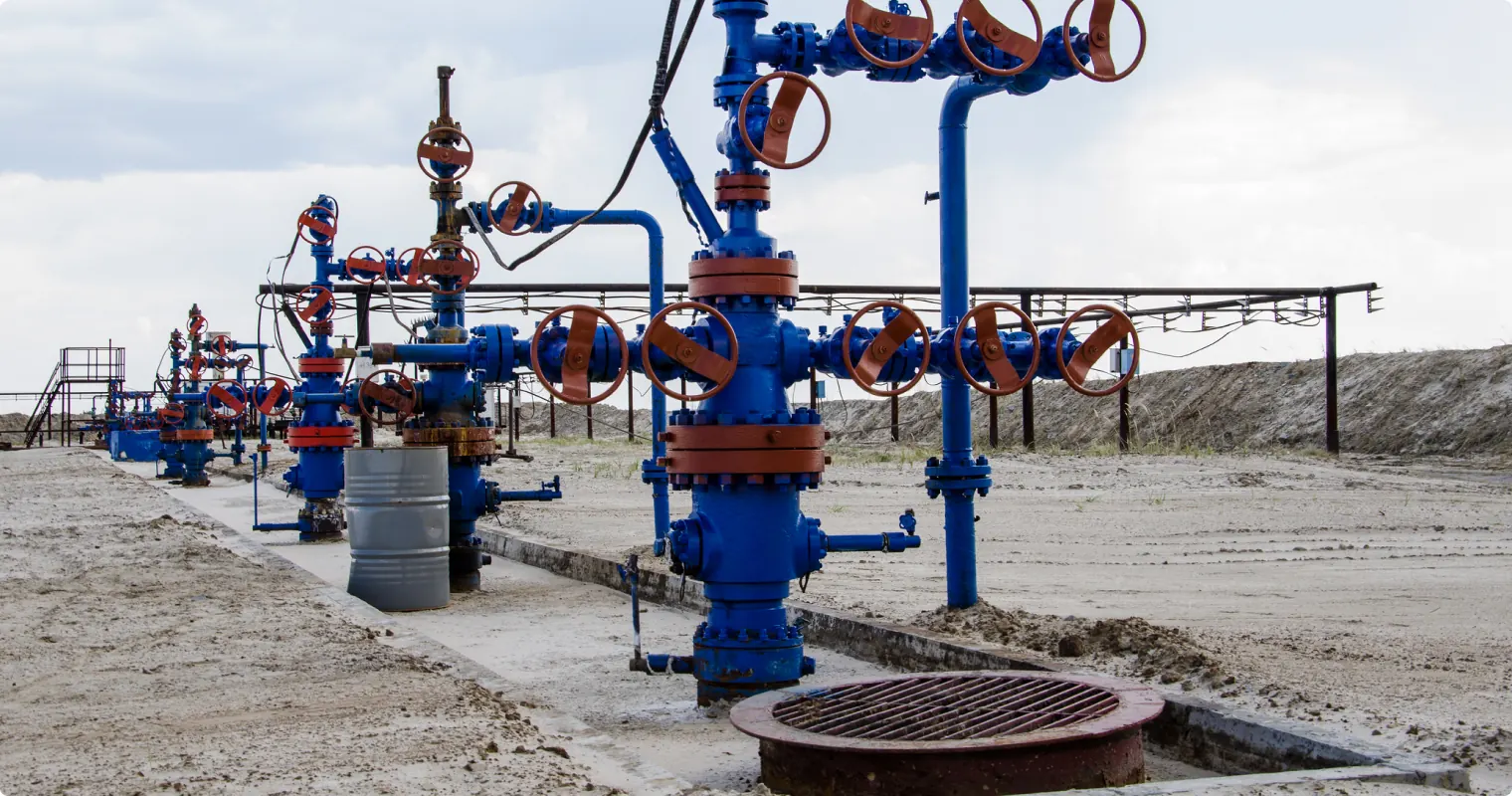
Brine is pumped down a cased and cemented well into a porous rock formation, typically thousands of feet down, sealed above by impermeable rock so that it cannot migrate into drinking water aquifers. It is the standard disposal route for oil and gas produced water and is used by inland desalination plants and industrial water systems where the geology allows.
What the permit requires
In the United States injection wells fall under the Underground Injection Control program, administered by the Environmental Protection Agency or a state with delegated authority. Wells are classed by what they inject. Industrial and municipal brine goes to a Class I well; oil and gas produced water goes to Class II. The permit covers well construction and casing materials, mechanical integrity testing, injection pressure limits low enough not to fracture the confining rock, monitoring, and closure. Geological characterization, including seismic risk, is part of the application.
Where it fails
It fails where the geology is wrong, which is most places. It also fails on cost: drilling and completing a deep injection well is a capital project in itself, and the wells need testing and eventually replacement. In regions where injection has been linked to induced seismicity, new permits are harder to get and injection volumes may be capped.
Evaporation ponds
How they work
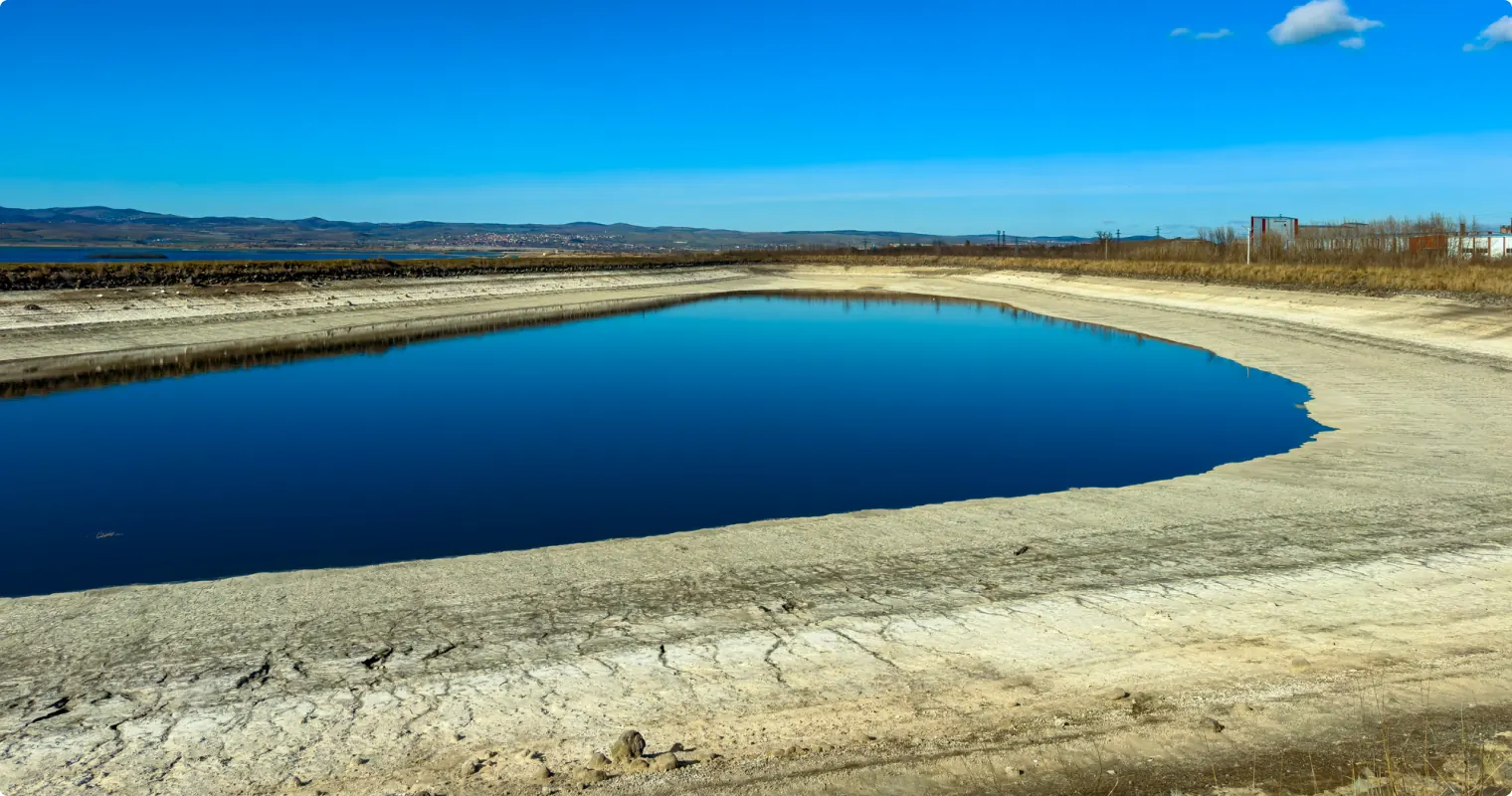
Brine is pumped into shallow, lined solar evaporation ponds and left for the sun and wind to remove the water. The dissolved salt crystallizes and settles. The pond is harvested or, at the end of life, closed with the salt waste inside.
What the permit requires
Evaporation ponds are wastewater treatment facilities and are permitted as such, usually by the state environmental agency, and the local land use authority has a say as well. Conditions cover the liner system and its materials, leak detection, freeboard against overtopping in storms, groundwater monitoring wells, stormwater separation, and a closure plan. Outside the United States the pond often needs its own environmental review separate from the plant. On our project in Indonesia, the solar pond option came out larger than the process plant it would feed, and its review of seepage, land use, and local ecology was one of the items to prepare for the regulator.
Where they fail
Wet climates, large volumes, expensive land, and shallow groundwater. Solar evaporation depends on the weather, and one wet season can undo a year of planning. They also fail anyone who needs a consistent product, because open solar ponds collect dust and rain. We go through sizing, liners, and the enclosed alternative in our guide to evaporation ponds.
Treatment before disposal: reducing the volume
Whatever the route, less brine is cheaper to dispose of than more. Most plants of any size put treatment systems in front of disposal to shrink the stream, and the disposal systems downstream are sized for what comes out of them.
Membrane treatment technology comes first. High-recovery reverse osmosis, ultrafiltration ahead of it, and electrodialysis can take dilute brine a long way toward concentrate at a fraction of the energy of evaporation. Their limit is scaling: calcium, magnesium, sulfate, and silica come out of solution as concentration rises and foul the membrane system, which is why chemical softening, a treatment step of its own, sits in front of the membrane stage on most industrial brines.
Thermal treatment technology finishes the job where the chemistry or the permit demands it, and it is the most energy-hungry equipment in the plant. Mechanical vapor recompression evaporators, multiple-effect evaporators, and crystallizers take the concentrate to solid salt and recovered water. Thermal treatment is proven and energy-hungry, and the design rule is to let membranes do as much of the volume reduction as they can and to size the thermal stage only for what is left. Where the host plant has waste heat or solar heat available, the thermal stage becomes much cheaper to run.
The chosen route then handles a smaller, more concentrated stream, or in a zero liquid discharge or full recovery design, only solids. We cover that standard on our zero liquid discharge page.
Materials: brine is corrosive
One practical point that gets missed at concept stage. Concentrated brine attacks ordinary steel and concrete. Outfall pipes, diffusers, injection well tubing, pumps, and tanks all need corrosion-resistant materials: high-density polyethylene and glass-reinforced plastic for pipes and tanks, duplex or super-duplex stainless steel for wetted metal parts, and marine-grade coatings on anything exposed to salt air. Pond liners are geomembrane materials chosen for chemical resistance and seam strength. Specifying the materials early avoids a redesign when the corrosion engineer sees the brine analysis. The materials of construction are listed in the permit application as part of the engineering package, and the wrong materials show up later as leaks, which the environmental agency treats as an unpermitted discharge.
Sewer discharge
How it works
Small brine streams, such as the concentrate produced by an industrial reverse osmosis system or a water softener system, are sent to the municipal sewer and treated at the local wastewater treatment plant along with everything else. The wastewater utility becomes, in effect, your disposal contractor.
What the permit requires
The treatment works issues an industrial user permit, sometimes called a pretreatment permit, setting limits on flow, salinity or conductivity, pH, and any heavy metals or organics. The plant has to be willing. Salinity is not removed by conventional sewage treatment systems, so a large brine load passes straight through to the plant’s own discharge and can put the plant’s permit at risk. Many treatment works now refuse new high-salinity connections for that reason.
Where it fails
Volume and salinity. A few cubic meters a day of low-salinity concentrate is usually fine. A desalination plant’s reject stream is not. Metals close the door immediately.
Land application and hauling
Land application, spreading or irrigating brine on land, is limited to very small volumes at low salinity, because salinity builds up in the soil and reaches groundwater. State agricultural or land application rules apply. It is rarely a solution for a plant of any size.
Hauling brine by truck to a licensed facility is the fallback for small or temporary streams. It moves the problem to someone else’s permit at a price per load, and it is only ever a bridge. Hauled brine is handled as an industrial waste, and if the analysis shows heavy metals or other regulated contaminants it may be handled as a hazardous waste, at a very different price.
When disposal becomes recovery
For a large, steady brine stream near industrial buyers, the best disposal method is often no disposal at all, but recovery. Water is recovered and reused. Salt is recovered and sold. With chlor-alkali technology, the brine is turned into caustic soda, hydrochloric acid, and sodium hypochlorite. The by-products of brine treatment, magnesium hydroxide, barium sulfate, and calcium carbonate, have markets of their own. Lithium recovery from brines is moving from research toward practice. Lithium from continental brines is an established industry, and lithium, magnesium, and potassium from seawater brines are now treated as strategic materials in several countries. Even so, lithium from seawater brine is not yet a route we would build a permit application around.
Lithium and critical minerals from brine. The same reject streams, the produced water that comes up with oil and gas, and the produced water of geothermal plants are now being looked at as a source of lithium, magnesium, potassium, and other critical minerals. Lithium recovery from continental brines is an established industry with its own permitting record, and critical minerals recovery from produced water is the subject of a United States Department of Energy research program. Direct lithium extraction technology, which pulls lithium out of a brine selectively instead of concentrating it in ponds, is moving from pilot plants toward commercial scale, and it changes the energy and land picture of brine mining because it skips most of the evaporation. For a desalination plant or a mining operation the questions are the same as for salt recovery: how much lithium and which critical minerals the brine actually carries, what technology can recover them at that concentration, what energy it takes, and whether there is a buyer. Seawater brine carries lithium at very low concentration, so the saleable products from a desalination brine stream today are water, salt, caustic soda, acid, and hypochlorite, with critical minerals recovery designed in as a later stage rather than promised on day one.
That is the route our project in Indonesia is taking. Instead of an outfall, the waste brine feeds a recovery stage and a series of modular chlor-alkali plants, and the dechlorinated brine from the electrolysis cells goes back into the loop. Nothing liquid returns to the sea. The trade is that the recovery facility is a chemical plant, permitted as one, with chlorine safety, energy, and air permits on top of the water permits, and an environmental impact assessment that runs alongside engineering. We explain the economics in our article on brine valorization.
If you are deciding between an outfall, a well, a pond, and recovery, call Permitting Plus at (470) 714-8564 before the design is fixed. We will tell you which routes the regulator is likely to accept for your site.
How to choose a brine disposal method
We follow the same sequence on every project.
Step 1: Analyze the brine
An independent laboratory analysis of brine flow and chemistry. Salinity, total dissolved solids, the scaling ions, silica, pH, heavy metals, and anything the process adds. This single document is the critical input. It rules routes in and out faster than anything else.
Step 2: Confirm what happens today
If there is an existing plant, find out exactly where its brine goes now, and write down what is confirmed and what is estimated. The regulator will measure the new project against the current baseline, and the difference between “we discharge 20,000 cubic meters a day” and “we may discharge up to 20,000 cubic meters a day” changes that baseline.
Step 3: Map the routes against the site
Coastal or inland. Geology under the site. Climate and land available. Distance to a treatment works, and its willingness. Distance to buyers for recovered products, and the energy tariff. Sensitive habitat, communities, and tourism nearby, and the local rules that protect them. Most sites have two realistic routes, not five.
Step 4: Map the approvals for each route
For each surviving route, list every permit, the agency that grants it, the studies it needs, and the order in which they must happen. Ocean outfall means dispersion modeling and possibly toxicity testing. Injection means geological characterization. A pond means a liner design and a groundwater monitoring plan. Recovery means a chemical plant file and an environmental impact assessment. The route with the shortest approval path is not always the cheapest to build, and the owner should see both. This map is the critical part of a brine management plan.
Step 5: Decide, then design
Only now does the plant get designed around the route. Owners who do it the other way round redesign.
Mistakes we see in brine disposal
Designing the plant before analyzing the brine. The lab report arrives and closes the route the plant was built for.
Assuming the outfall is available. Marine discharge limits are tightening in most of the countries we work in, and the permit the plant next door got ten years ago is not the permit you will get.
Treating the pond as land. It is a facility with a liner, a permit, and a review of its own.
Sending brine to the sewer without asking. The treatment works can refuse, and often does.
Ignoring the by-products. Brine treatment produces solids. Planned for, they are recovery products. Unplanned, they are a solid waste stream with its own waste permit.
Underestimating what the site must provide. Permits, land, civil works, utilities, and logistics stay with the owner however the disposal is done. When that split is not written down at the start, the schedule slips.
Frequently asked questions
Can brine go down the drain?
Small volumes of low-salinity concentrate from a household or small commercial system usually can, subject to local rules. Industrial volumes need an industrial user permit from the treatment works, and high salinity or metals will be refused.
Is brine disposal regulated?
Yes, in every jurisdiction we work in. Surface water discharge, injection wells, ponds, sewer connections, and land application each have their own permit and their own environmental agency. Recovery facilities are permitted as chemical plants.
What is the cheapest way to dispose of brine?
Whichever route your site already supports. An existing outfall with permit headroom is cheap. A pond is cheap where land is cheap and the climate is dry, and it costs no energy to run. Injection is cheap only where a suitable formation exists. There is no answer that holds everywhere, which is why the site assessment comes first.
How long does a brine discharge permit take?
A modification to an existing permit can move in months. A new outfall with dispersion modeling and toxicity testing, or a new injection well with geological characterization, is usually a year or more and sits on the critical path alongside engineering. A recovery facility with an environmental impact assessment is a multi-year program.
In short
Five brine disposal routes, one of which will be right for your site, and a recovery option that turns a waste stream into salt and chemicals and is replacing disposal for large desalination and industrial plants. The brine analysis and the regulatory map decide which, not the technology brochure, and good brine management starts with both. Get both before the design is fixed.
Send us your brine analysis and your site, and we will tell you which routes are open and what each one will take. Call (470) 714-8564 or request a consultation. The full scope of what we do is on our brine management service page.
Talk to us about your brine
Send us the analysis and the flow, and we will tell you which routes are open to you, what the regulator will ask, and how long it will take.