
Brine Valorization: Turning Reject Brine Into Salt, Caustic Soda and Acid
By Sean Alford, Permitting Plus
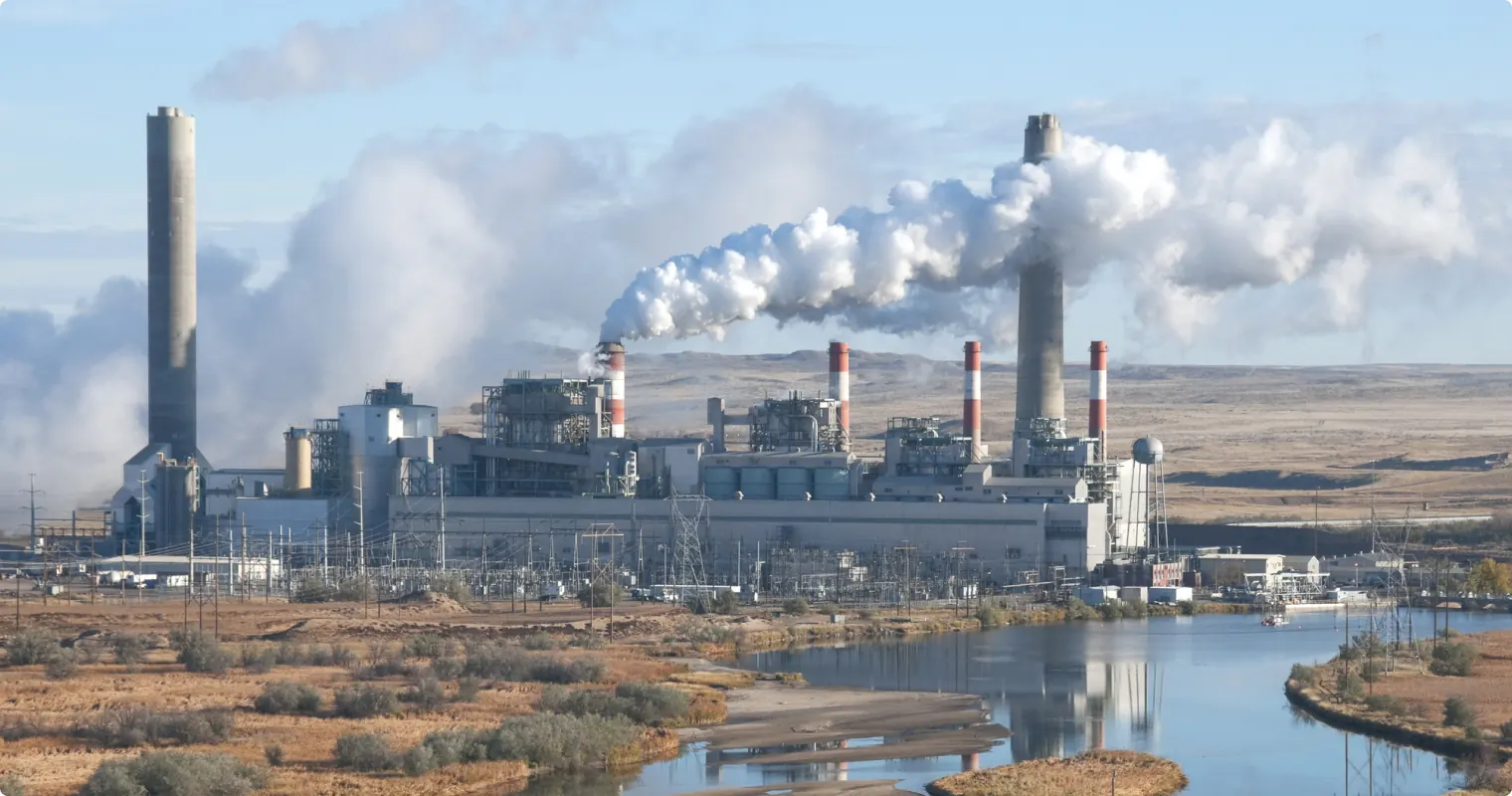
Brine valorization means taking the concentrated reject stream from a desalination plant or an industrial process and turning it into products you can sell: water, salt, caustic soda, hydrochloric acid, sodium hypochlorite, and in some cases magnesium, barium, and other minerals. Done properly, it replaces an outfall with a production facility and leaves nothing liquid to dispose of.
That is the promise. The reality is a chemical plant with its own engineering, its own energy bill, its own market risk, and its own permits, and most of what is written about brine valorization skips those parts. This article does not.
Permitting Plus provides project management, engineering, procurement, and construction for brine management projects in the United States and worldwide, together with the permits they need, and we are working now on a large brine valorization project in Indonesia: a seawater reverse osmosis brine stream of tens of thousands of cubic meters a day being turned into salt and chlor-alkali chemicals. We use that project throughout this article, with figures rounded from its preliminary design basis. Our brine management page explains how we approach the work as a whole.
Table of Contents
What brine valorization means
The word comes from the French for adding value. In the water sector it describes any process that recovers something saleable from brine instead of treating the brine as waste. The academic research literature uses it broadly, covering everything from salt harvesting to lithium extraction to carbon dioxide capture using brine chemistry. In practice, for a plant owner, it means one of three things.
From waste stream to feedstock
The first meaning is the simplest. The brine stops being an effluent and becomes the raw material for something else. On our project in Indonesia, the reject brine from a seawater desalination plant is the primary feedstock for a set of chlor-alkali plants. That single change moves the stream from the effluent side of the permit to the production side.
What can be recovered
The second meaning is the list of products. Here is what reject brine can yield, where each product comes from in the process, and who buys it.
| Product | Where it comes from | Who buys it |
|---|---|---|
| Recovered water | Concentration and evaporation stages | The host plant, for reuse |
| Industrial salt (sodium chloride) | Crystallization after concentration | Chlor-alkali plants, chemical and food industries, de-icing |
| Food-grade mineral salt | Separate refining and certification | Domestic and export food markets |
| Caustic soda, or sodium hydroxide (NaOH) | Membrane cell electrolysis of purified brine | Alumina refining, pulp and paper, textiles, soap, water treatment, mining |
| Hydrochloric acid | Chlorine and hydrogen from electrolysis, combined | Steel, metal finishing, chemical manufacturing, water treatment |
| Sodium hypochlorite | Chlorine reacted with caustic soda | Municipal and industrial water treatment, sanitation |
| Magnesium hydroxide, barium sulfate, calcium carbonate | Precipitated during brine purification | Industrial buyers, construction, chemical sector |
| Lithium, potassium, other minerals | Selective mineral extraction, still mostly at research and pilot stage for seawater brine | Battery and fertilizer supply chains |
Reducing the discharge to nothing
The third meaning is the environmental outcome. Where water is recovered, salt is crystallized, and the process brine is recycled, the facility approaches zero liquid discharge, usually shortened to ZLD. Resource recovery and ZLD are two sides of the same design. That is the sustainable outcome regulators in water-scarce regions increasingly expect of desalination and industrial plants, and it is the outcome that makes valorization a permitting strategy and not only a revenue strategy.
Why desalination brine is the best candidate
Not every brine is worth valorizing. Seawater reverse osmosis brine, usually written SWRO brine, from desalination plants is the best candidate for four reasons.
It is large and steady. A coastal SWRO desalination plant serving an industrial estate runs around the clock and produces a predictable volume at a predictable salinity. Chemical plants need exactly that. Our project’s design basis is tens of thousands of cubic meters a day, continuous.
It is clean, relatively speaking. SWRO brine is concentrated seawater plus a small amount of antiscalant and cleaning chemicals. It does not carry the heavy metals or organics that industrial and mine brines often do, which keeps the purification stage simple and the products saleable.
It is where the buyers are. Coastal industrial estates with desalination plants host the alumina refineries, pulp mills, steel plants, and water treatment operations that consume caustic soda, acid, and hypochlorite. Short distances to market matter for bulk chemicals.
It is under regulatory pressure. Marine effluent limits are tightening for desalination plants everywhere, sustainable desalination now means dealing with the brine, and the desalination sector is the most visible source of brine in the public eye. A valorization project answers the regulator’s question before it is asked.
The chemistry: why the salinity has to rise from 5% to 30%
SWRO brine leaves the desalination plant at roughly 5% salinity, about one and a half times seawater.
Membrane cell electrolysis, the process that makes NaOH, needs brine at about 30%, or 300 grams per liter, and it needs that brine very pure. So every chlor-alkali valorization project has two stages before any chemistry happens: purification and concentration. These two stages are where the engineering effort, the energy, and most of the capital costs go. The electrolysis plant itself is the well-understood part.
Brine treatment before electrolysis
The analysis on our project showed calcium, magnesium, sulfate, and silica at levels that would scale or poison the electrolysis membranes. So the brine goes through a treatment stage first.
On our project the primary treatment unit uses soda ash and caustic soda to precipitate calcium and magnesium, and barium chloride to precipitate sulfate. The precipitates come out as limestone, magnesium hydroxide, and barium sulfate, each in tens of tonnes a day. A secondary treatment unit with ion exchange polishes the brine to the purity the membrane cells require. Purified brine at 300 to 305 grams per liter goes to the electrolysis systems; depleted brine returning at 180 to 200 grams per liter is re-saturated and sent round again.
Two points from that design matter for every project. The treatment chemicals can be made on site, because the plant produces its own NaOH and hydrochloric acid, which cuts purchases and deliveries. And the precipitates are products if their purity and their buyers are planned for. If they are not, they are a solid waste with a disposal permit of its own.
Getting from 5% to 30%
Concentration is the largest single decision in a desalination brine project. There are three ways to do it.
Solar evaporation ponds concentrate SWRO brine using sun and wind. They are cheap to run and weather-dependent, they need a lot of land, and the product is inconsistent. On our project the pond option needed more land than the chemical plant itself.
A vacuum salt plant, using multiple-effect evaporators, produces pure dried vacuum salt year-round in a compact footprint at a high energy cost.
Enclosed thin-film evaporation is the option under evaluation on our project: brine flowing as a thin film down long channels stacked in tiers inside air-supported domes, in warm, dry air. The films take the brine part of the way, crystallizers take it to about 30%, and mother liquor recycles back into the loop. Saleable salt output depends on the recovery actually achieved and is confirmed only by a continuous commercial-scale performance test.
We compare the pond and the enclosed system in detail in our guide to evaporation ponds.
Brine valorization technologies compared
The technologies used in valorization projects are established individually. What is newer is combining them, at scale, on a desalination plant’s reject stream.
| Technology | What it does | Maturity for SWRO brine |
|---|---|---|
| High-recovery reverse osmosis and membrane brine concentrators | Raise brine concentration using pressure, at low energy per cubic meter | Proven; limited by scaling |
| Electrodialysis | Concentrates salts using an electric field across ion-selective membranes | Proven at industrial scale, used in some desalination projects |
| Solar evaporation ponds | Concentrate brine with sun and wind | Proven; land- and climate-limited |
| Enclosed thin-film evaporation | Concentrates brine in controlled air inside domes | Newer; fewer operating references |
| Mechanical vapor recompression and multiple-effect evaporators | Concentrate brine or produce vacuum salt with electricity or steam | Proven; energy-intensive |
| Crystallizers | Produce solid salt from concentrated brine | Proven |
| Membrane cell chlor-alkali electrolysis | Converts purified 30% brine to NaOH, chlorine, and hydrogen | Proven for decades; modular plants operating |
| Selective mineral extraction (lithium, magnesium, potassium) | Recovers specific ions from brine | Research and pilot stage for seawater brine; commercial for some other brines |
Two of these technologies decide most projects: the concentration systems, because they set the energy and land profile, and the electrolysis systems, because they set the product slate. The rest are supporting technologies chosen to fit those two, and the control and monitoring systems tie them together.
The chlor-alkali route: caustic soda, chlorine, and hydrogen
Chlor-alkali is one of the oldest industrial technologies there is, and the chlor-alkali industry is large and global. An electric current passed through purified brine splits it into sodium hydroxide (NaOH) on one side of a membrane and chlorine gas on the other, with hydrogen given off as well. The chlorine and hydrogen are then combined into hydrochloric acid, or the chlorine is reacted with caustic to make sodium hypochlorite.
Membrane cell electrolysis in modular plants
Traditional chlor-alkali plants are built on site over years. The modular technology we install, supplied by our technology partner, is different: the electrolyzers, transformers and rectifiers, brine filtration, acid unit, and controls are pre-assembled at the manufacturer’s workshop into process skids sized for standard shipping containers, tested there, and shipped.
Identical modular plants are planned in phases. Each phase is one building with several parallel trains sharing storage and a common truck-loading corridor. Because the block repeats, civil design, permitting, spares, and crew training are engineered once and reused for the phases that follow.
Modular delivery changes the risk profile of the whole project, and it changes production planning. Factory testing catches problems before shipment. On-site construction is shorter and less disruptive. And capacity grows in predictable increments, which lets the owner match investment to the market rather than building the full plant on day one.
Two product models, and why the permit decides
The same electrolysis plant can run two ways.
Model A makes caustic soda, hydrochloric acid, and sodium hypochlorite. Chlorine and hydrogen are consumed inside the plant. Nothing pressurized is stored or shipped. The plant makes its own brine treatment acid, and the permitting and hazard studies are simpler.
Model B makes caustic soda, liquid chlorine, and hydrogen. NaOH output rises, because none is used to make hypochlorite, and there is a saleable hydrogen stream. But pressurized liquid chlorine is stored on site. That triggers a major-hazard safety case, becomes the dominant permitting risk in the project, and changes the distribution model to pressurized transport.
Our project chose Model A. Each plant makes caustic soda solution at 50%, sodium hypochlorite at 15%, and hydrochloric acid at 33%, the standard commercial grades.
What the products are worth to the market
None of these is a specialty chemical looking for a buyer. They are products with a proven return on investment in established worldwide markets, and the desalination industry is not their only customer. Caustic soda alone goes to alumina refining, pulp and paper, textiles, soap and detergents, mining and mineral processing, and water treatment. In Indonesia, domestic caustic soda demand is growing and part of it is still imported, so production added inside the country from a waste stream has a ready market.
That last point matters for the business case and for the permit. A valorization project that displaces imports and supplies local industry is easier to explain to a regulator than one that exports a commodity.
What buyers ask for before they sign
Bulk chemical buyers do not buy on a brochure. Before an alumina refinery, a pulp mill, or a water utility commits to a new supplier, it asks for four things.
A product specification. Concentration, impurities such as chlorate, iron, and heavy metals, and the test methods used and the batch data, stated in writing and matched to the buyer’s own intake specification.
Consistency. A new supplier has to show that the product will meet that specification in every load, not only in the first trial batch. For a plant making product from a waste stream, that depends on the purification stage and on the laboratory that checks each batch.
Supply security. Buyers want to know what happens when the plant is down for maintenance, how much storage sits on site, and whether a second source is available. Modular plants help here, because one train can stop while the others keep running.
Logistics and paperwork. Tanker loading, safety data sheets, transport permits for corrosive products, and, for food-grade salt, the certification the local food authority requires.
Offtake agreements that cover these points make the project financeable, and they also belong in the permit file, because they show the regulator that the products have somewhere to go and will not become a waste stream of their own.
A brine valorization project in development
Here is how the pieces fit together on our project in Indonesia, where an SWRO desalination plant supplies process water to an industrial site. Figures are rounded from the preliminary design basis and are subject to confirmation in detailed engineering.
The brine split
The chlor-alkali plants do not need all of the brine. At full development they draw roughly a third of it. The rest goes to the salt recovery and crystallization systems, so no part of the stream is left unmanaged.
The ZLD loop
Dechlorinated brine from the electrolyzers returns to the concentration loop and is reused as feedstock. Water is recovered and reused. No salt is purchased; concentration is by evaporation alone. Only purified products and solid salts leave the site. Every stream is accounted for in the water and solids balance, which is the core document of ZLD management.
That claim is defined stream by stream. Reject brine is inside the loop. Cooling blowdown, laboratory waste, and general site effluent are being confirmed as in scope or shown separately, because a zero discharge claim that quietly excludes three streams will not survive review. We cover the standard on our zero liquid discharge page.
What it takes to run
Electricity is the largest operating input by far, followed by process water and demineralized water, and the full site needs operating, laboratory, and management staff on continuous shifts.
The technology package includes operator training at the manufacturer’s reference plant before start-up, a performance guarantee on the electrolyzers, and remote monitoring and audit support. Design life is 25 years.
What drives the costs of brine valorization
We do not publish project cost figures here; they belong in commercial discussions and they move with every design decision. What we can say is where the costs sit, in order.
Concentration comes first. Getting from 5% to 30% salinity is the largest capital item and the largest energy item in the project. The choice between ponds, vacuum salt, and enclosed evaporation sets the cost profile of everything else.
Energy comes second. On a site of this size the electricity tariff is one of the two or three numbers that decide whether the project works. We ask for it at the first meeting, along with the site elevation and any waste heat available from the host plant.
The chlor-alkali plants themselves come third, and modular delivery makes that part the most predictable.
Then the salt production route, which can be a plant of its own; the utilities and civil works the owner provides; the operating costs of a staffed production site; and the working capital tied up before the first tanker leaves.
Against all of that sit three product streams with established markets, a salt product, by-products from purification, and the avoided cost of the disposal that no longer happens. The business case is real, but it is a chemical production company’s business case, not a water utility’s, and the owner should go in knowing that. Good brine management treats the brine as a resource from the first study; good valorization turns that resource into a production plan.
Research, pilots, and proven plants
Brine valorization has attracted a great deal of research in the last decade. University research groups have published research on NaOH recovery from desalination brine, on mineral extraction, and on using brine chemistry to capture carbon dioxide, and sustainable desalination is now a research field of its own. Engineering firms have published strategy papers, and industry bodies have published data on brine volumes and product markets. Technology developers have run pilot plants to move the research toward practice, and a number of valorization projects in the Middle East, Europe, and Asia have been announced, some of them since scaled back or restructured as the economics were tested.
That research matters, and we read it, including the research on desalination brine and the industry data behind it. But an owner about to spend on a full-scale plant needs to separate three things that are often described with the same words.
Research is a paper, a laboratory result, or a model. Research tells you what is chemically possible; it does not tell you what a plant costs to run.
A pilot is a small plant built to test a process under real conditions for a limited time. A pilot proves the process can run. It does not prove it can run for 25 years at commercial scale, and pilot results rarely carry a performance guarantee.
A reference plant is a full-scale facility in live commercial operation, using the same design being proposed to you, that you can visit.
We only install process plants that have reference plants. Our technology partner’s modular chlor-alkali plants are live plants in commercial operation around the world, producing saleable products with zero liquid discharge. The regulator, the owner, or any other party can see them operating. Replicating a working plant is not research and development. Start-up risk and schedule uncertainty are both lower, and the environmental case is easier to make, because emissions, effluents, and safety systems can be inspected rather than modeled.
Where a step in the process is genuinely new, still at the research stage, we say so, and we handle it the right way: name it, bound it, and test it, rather than fold it into the guaranteed part of the plant.
Energy, renewable power, and the carbon question
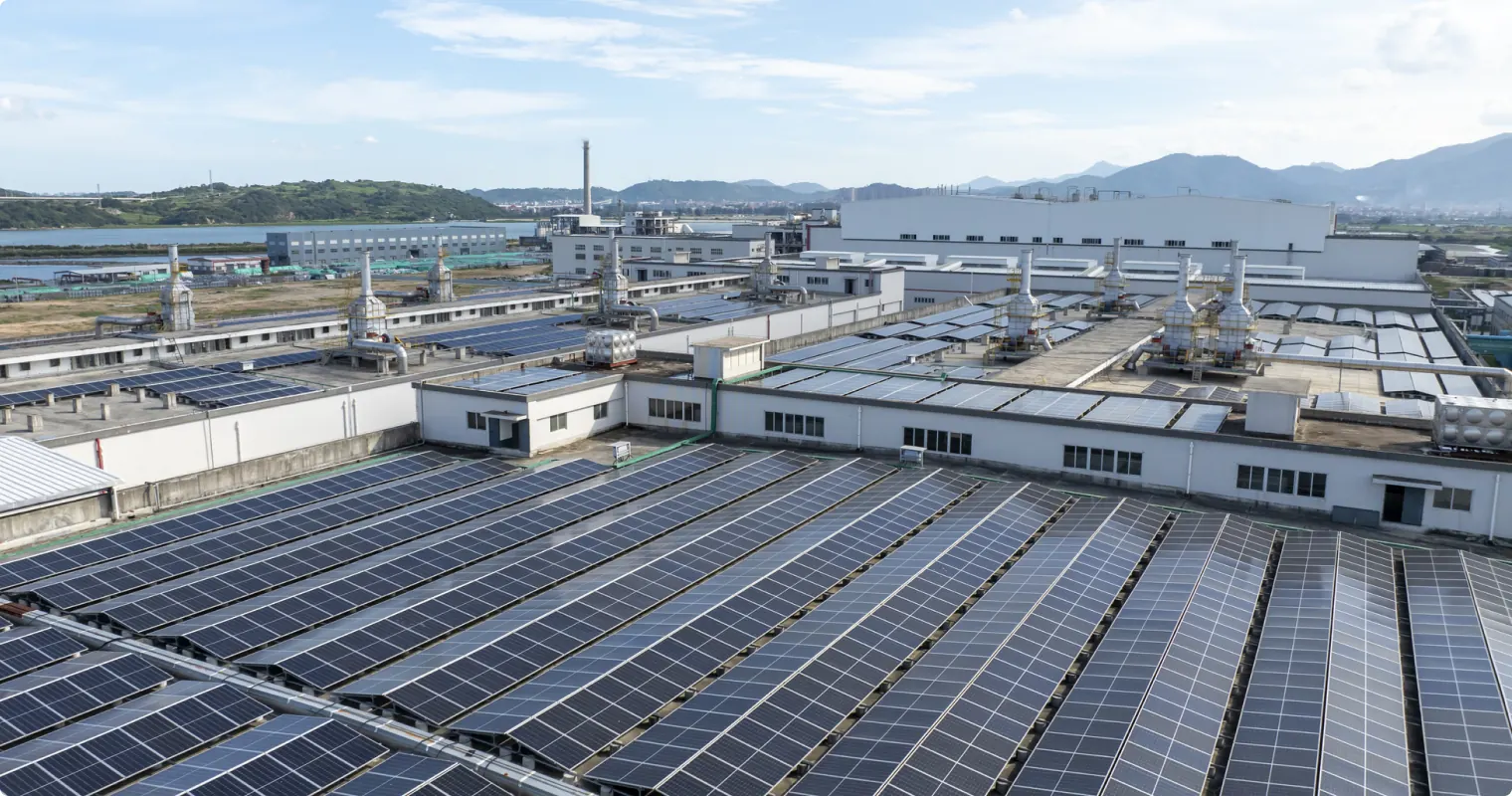
A chlor-alkali plant is an electricity consumer before it is anything else, and a valorization project inherits that. Regulators now ask about the energy source and the carbon footprint alongside the water balance, and a sustainable energy supply is part of the environmental case.
On our project the base case is grid electricity and gas for heat, and energy is the largest of the operating costs. Renewable options for the site are part of the environmental case. Recovered heat from the host desalination plant, renewable solar heat for the evaporation stage, and phased operation all reduce the energy demand of the concentration step, which is where most of the heat goes. Evaporating the full brine stream on purchased natural gas alone is unlikely to be economical, and we design around that from the start.
Renewable supply also changes the permit conversation, and renewable projects nearby can change the tariff. A project that recovers a waste stream and runs on renewable power is a different proposition to a regulator than one that recovers a waste stream and adds a gas-fired energy load to the grid.
Permitting a brine valorization plant
This is the part most articles on valorization leave out, and it is the part we are built for. A valorization facility is a chemical plant and is permitted as one. Before the file goes to the regulator, these are the items to prepare.
| Item | Why it matters |
|---|---|
| The environmental permitting pathway | The plant needs its own environmental impact assessment or management plan under the host country’s rules, in Indonesia the AMDAL or UKL-UPL pathway, not references to standards from another country. |
| Chlorine gas safety and emergency response | Handling, off-gas treatment, leak detection, and an evacuation plan. The first question a reviewer asks about a chlor-alkali plant. |
| Scope of the zero discharge claim | Sampling often covers the reject brine only. Other site effluents must be in scope or shown separately, or the claim fails. |
| Evaporation pond footprint | A pond option larger than the plant needs its own review of seepage, land use, and ecology. |
| Energy source and carbon footprint | Grid and gas are a common base case; renewable options strengthen the case and may be required. |
| Local content and community benefit | Local hiring, training, and local contractor scope framed as commitments. |
| Before-and-after baseline | A plain comparison of the current outfall and the post-project state. |
On top of these sit the permits any chemical plant needs: air, hazardous materials handling, process safety, stormwater, and building and land use approvals. The application file carries a process flow diagram, piping and instrumentation diagrams, a general arrangement, an equipment list, a power list, a control philosophy, the feed and brine analysis, a full mass balance, the discharge or zero discharge case, an emergency response plan, and the baseline. We assemble that file, coordinate the studies, and manage the agency comments.
Valorization projects elsewhere, and what they show
Our project is not the only one. Desalination developers in the Middle East have planned large valorization schemes, and some have since been scaled back or restructured as the economics were tested. Industry in India and China has made ZLD with salt recovery routine in sectors where regulators mandate it, though mostly on industrial wastewater rather than desalination brine.
The pattern across these projects, and across the published research on them, is the same one we apply. Pilot work proves the chemistry the research predicted. Phased, modular construction manages the capital. Renewable or recovered energy manages the operating cost and the carbon question. And the projects that stall are usually the ones that scaled a pilot straight to a megaproject without a reference plant in between.
Where valorization does not fit
Valorization is a large-plant strategy, suited to the desalination sector, to large industrial water users, and to mining and chemical sector operations with a steady saline stream. It needs a steady brine volume, energy at a workable tariff, land, water, a skilled workforce, and buyers within reach for bulk chemicals. A small inland reverse osmosis system, a seasonal operation, or a remote site without a chemical market will not support a chlor-alkali plant, and should not try.
For those sites the right answer is still one of the brine disposal routes, sized as small as good treatment allows. We compare them in our guide to brine disposal methods.
There is also a middle ground. Salt or mineral recovery without the chemical plant, or water recovery with solid salt sent to a buyer or a landfill, captures part of the value at a fraction of the complexity. Which level fits is a question of volume, market, and the regulator’s expectations, and it is the first thing we work out.
How a valorization project moves from idea to operation
The milestone path on our project is the one we follow on most projects of this kind: proposal acceptance, a visit to the operating reference plant, a binding letter of intent, full engineering documents, a binding contract and start of manufacturing, equipment ready to ship, installation, commissioning, operation.
The program runs about two years from kick-off to commissioning of every plant. Engineering comes first. Fabrication, transport, installation, and commissioning then overlap in staggered stages rather than running one after another. The environmental approvals sit on the critical path from the first month and are sequenced to keep pace with engineering.
Formal readiness reviews sit before shipment, installation, energization, and performance testing. The operating principle is short: commission only when the site, the utilities, the safeguards, and the operating team are fully ready. Owners who skip the reviews find the equipment waiting on the site, or the site waiting on the permit.
If you have a large brine stream and want to know whether valorization is realistic for your site, call Permitting Plus at (470) 714-8564. We will tell you what the numbers and the regulator are likely to say before you commission a study.
Frequently asked questions about brine valorization
Is brine valorization profitable?
The return varies with production. The products themselves, caustic soda, hydrochloric acid, and sodium hypochlorite, are products with a proven return on investment in established worldwide markets, and a plant works best at scale, with a workable energy tariff and buyers nearby. It is a chemical business, with chemical-industry margins, market risk, and operating discipline. The avoided cost of discharge and the regulatory position are part of the return, and they are often what tips the decision.
Does brine valorization achieve ZLD?
It can, if the water and solids balance closes for every stream on the site and not only for the reject brine. Define it stream by stream, and do not use the phrase until the balance is confirmed.
Can lithium be recovered from desalination brine?
Lithium, magnesium, and potassium are all present in seawater brine, large desalination developers are designing selective processes for them, and lithium recovery from other brines is an established industry. For seawater brine it remains mostly at the research and pilot stage, and research results are not a design basis. We design the treatment stage so a selective lithium step can be added later, but we do not build a permit application around it today.
What is the difference between brine valorization and brine treatment?
Treatment removes what should not be in the brine so it can be discharged, concentrated, or used. Valorization is what you do with the brine afterward to make products. Both sit inside brine management, which also covers the permits, the disposal routes, and the mineral and salt production that follow. Every valorization plant has a treatment stage; not every treatment plant leads to valorization.
How long does a valorization project take?
From first study to operation, expect years, not months, for a desalination brine project of any size. On our project the engineering, construction, and commissioning program alone is about two years, and the environmental approvals run alongside it.
In short
Brine valorization turns a desalination or industrial waste stream into water, salt, and chemicals with real markets, and in doing so replaces a discharge permit with a production facility. It is the sustainable answer for large, steady brine volumes near industry and energy, with production technologies that are proven individually and combined with care. It is a chemical plant, with a chemical plant’s engineering, cost, and permits, and it should be planned as one from the first meeting.
Send us your brine analysis, your flow, and your site, and we will tell you which level of valorization is realistic and what it will take to permit. Call (470) 714-8564 or request a consultation. The full scope of our work is on our brine management service page.
Talk to us about your brine
Send us the analysis and the flow, and we will tell you which routes are open to you, what the regulator will ask, and how long it will take.