
Brine Management Solutions for Desalination and Industrial Plants
Your desalination plant makes two things. Fresh water, and brine.
We start with the brine, not the equipment.
Flow, water chemistry, and what actually leaves the site today. Every decision after that depends on those three facts.
We map the approval path early.
Which agency, which study, which order. You learn what the regulator will ask before you have spent money on a design that cannot answer it.
We turn a waste stream into a plan.
Discharge it, treat and dispose of it, or recover water, salt, and chemicals from it for reuse and sale. We show you the choices side by side, with the permitting risk of each.
We install technology that is already running.
Our technology partner's modular chlor-alkali plants are in commercial operation around the world, turning brine into saleable products with zero liquid discharge.
What you receive
- A brine management plan built on your own brine analysis
- A regulatory pathway for your country and site
- A comparison of treatment, disposal, and reuse routes
- Engineering, procurement, and construction
- Commissioning, on a schedule from first meeting to operation
What brine management means once the plant is real
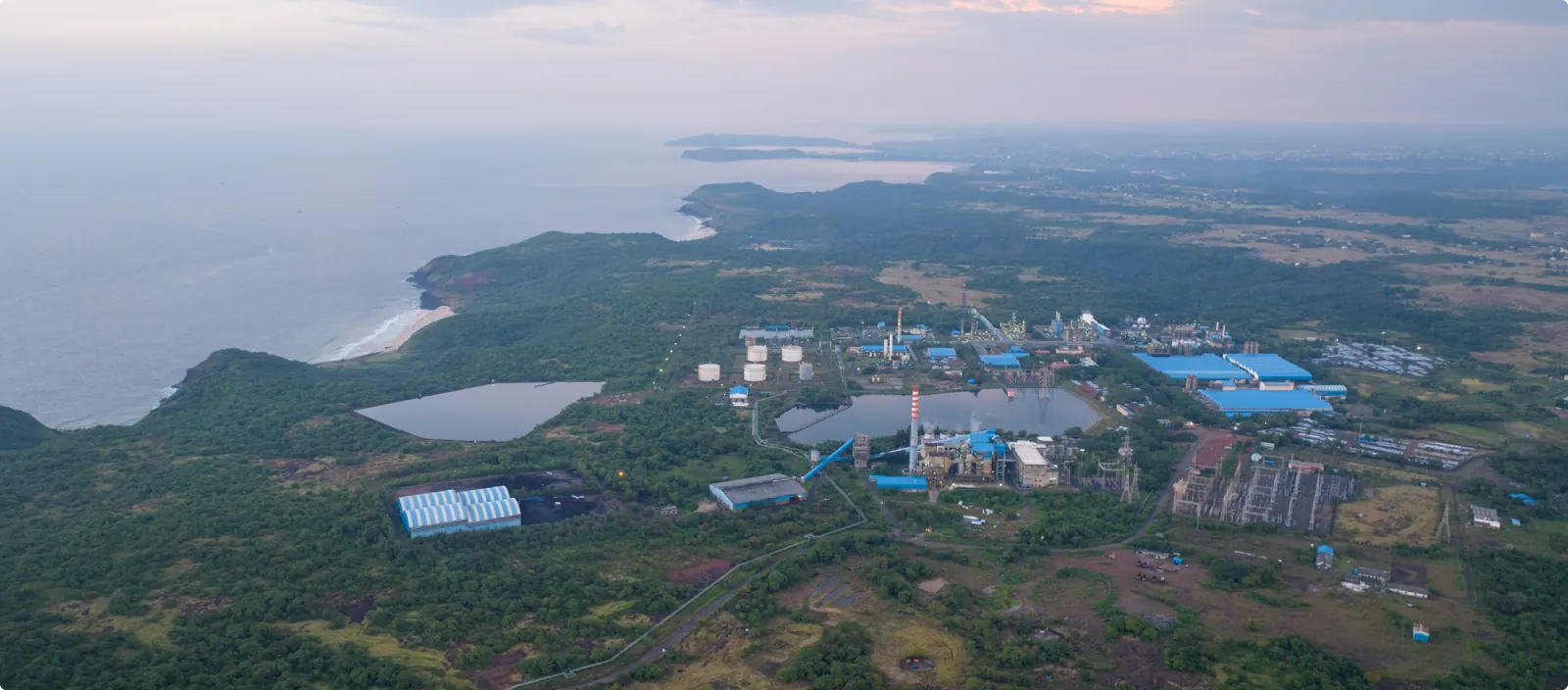
Brine is the concentrated salt water left behind when you take fresh water out of seawater or when an industrial process rejects dissolved salts. Every reverse osmosis plant makes it. So do cooling towers, chemical plants, food processors, textile mills, and mines.
For years the answer was simple. Send the reject stream back to the sea, or to a well, or to a pond, and move on. That answer is disappearing. Discharge limits are tightening in most of the countries we work in, and in some regions the expectation is now zero liquid discharge, where no liquid effluent leaves the site at all.
That is why brine management is not one task. It is a system. It covers how much brine you make, what is in it, where it can legally go, what treatment technologies it needs to get there, what that costs, and whether any of it can be turned into a resource you can reuse or sell.
Where the brine comes from
Seawater reverse osmosis is the largest source we deal with. A large coastal desalination plant serving an industrial estate can reject tens of thousands of cubic meters of brine a day, at roughly one and a half to two times the salinity of the ocean it came from.
Industrial reject water is the second source. Reverse osmosis systems that make process water for a refinery, a smelter, or a power plant produce a smaller but more concentrated stream, and cooling tower blowdown and water treatment systems add to it.
Mining and mineral processing produce brines of their own, as does lithium extraction from natural brines. Salt-heavy waste streams from tanneries, textile dyeing, and chemical manufacturing round out the list.
Each of these brines has a different chemistry. The salt is only part of it. Calcium, magnesium, sulfate, silica, and bicarbonate decide how much treatment the brine needs and what it can be turned into.
Why discharge is getting harder
Three things are moving at once.
Discharge limits are being lowered. Regulators are adding new parameters, watching salinity at the outfall more closely, and asking for dispersion modeling and monitoring that were not required ten years ago.
Water-scarce regions are moving toward zero liquid discharge as a standing expectation for industrial effluent. India has mandated it for whole sectors. China has designated industrial zones where no liquid waste may leave. Indonesia’s environmental regulation and international best practice are both moving in the same direction.
Public attention has changed. A visible brine outfall near a fishery, a beach, or a coral system is a reputational problem before it is a legal one.
The practical result is that a plant designed around “return it to the sea” can find, halfway through permitting, that the sea is no longer an option at the volume and concentration it planned on.
The three choices every operator faces
Every brine management decision comes down to one of three routes, discharge, treatment and disposal, or recovery, or a mix of them, and the technologies follow the route.
| Route | What it means | Where it fits | Main permitting question |
|---|---|---|---|
| Discharge | Return the brine to the sea, a river, a sewer, or a deep well, usually after dilution or partial treatment | Coastal plants with a receiving water that can take it, and jurisdictions that still allow it | Will the regulator accept the salinity and the mixing zone, and for how long? |
| Treat and dispose | Reduce the volume with membrane systems or evaporation solutions, then send a smaller concentrate or a dry solid to disposal | Inland plants, plants with tightening limits, plants with no receiving water | Where does the final concentrate or solid waste go, and is that disposal route permitted? |
| Recover and reuse | Recover water, salt, and chemicals from the brine for reuse on site or for sale | Large, steady brine volumes near industrial customers for salt, caustic soda, acid, or hypochlorite | Is the recovery facility itself permitted as a chemical plant, and is the zero liquid discharge claim real? |
Our position is simple. The route should be chosen from the brine analysis and the regulatory map, not from a solutions brochure. The rest of this page explains how we do that.
How we run a brine management project
We follow the same sequence on every project, whether the client is a plant owner, a developer, or an engineering firm that needs the permitting side handled.
Step 1: Get the numbers
Nothing useful happens until we have two things: the brine flow and the brine chemistry.
Flow tells us the scale of the problem. Chemistry tells us what kind of problem it is. On a seawater reverse osmosis project, these are the parameters the laboratory analysis of the reject stream has to cover, and why each one matters:
| Parameter | Why it matters |
|---|---|
| Salinity | Sets the concentration step needed for any recovery route |
| Total dissolved solids | Sizes every downstream unit |
| Sodium | The sodium chloride you can recover |
| Chloride | The sodium chloride you can recover, and the chlorine you can make |
| Calcium | Scaling. Must be removed before membranes or electrolysis |
| Magnesium | Scaling, and a recoverable by-product |
| Sulfate | Scaling, and a barium sulfate by-product if removed chemically |
| Silica | Fouls membranes and electrolysis cells at low levels |
| Bicarbonate | Affects pH control and scaling |
| pH | Baseline for pretreatment chemistry |
That analysis is the most critical input in the project. On a typical seawater reject stream it shows that the brine needs a purification stage before any membrane or electrolysis step, that the salinity is far below what a chemical plant needs, and that the concentration step will be the biggest engineering and permitting decision in the project. None of that can be guessed from the plant’s design capacity alone.
The physical and chemical analysis of your feed water is the single most decisive input we ask for. Salinity, composition, and temperature drive the sizing of the reverse osmosis membrane units and any concentrator, and they decide the treatment in front of them. Site elevation, the electricity tariff, and any available waste heat come next.
Step 2: Confirm what actually happens today
We do not assume we know what a plant is discharging. We ask, we sample, and we write down what is confirmed and what is estimated.
On our project in Indonesia, the design data gave an estimated reject brine flow running around the clock. Whether that stream was being returned to the sea, partly used, or handled some other way was not yet confirmed. So our briefing said so, plainly, and set out the estimated scenario to be validated during detailed engineering.
This matters for two reasons. A regulator will find the gap if you do not. And the difference between “we release 20,000 cubic meters a day” and “we may release up to 20,000 cubic meters a day” changes the baseline your project is measured against.
The same discipline applies to the zero liquid discharge claim. We do not make it until the complete site-wide water and solids balance is confirmed. Reject brine is one stream. Cooling blowdown, laboratory waste, and general site effluent are others. Either they are inside the zero discharge scope or they are shown separately.
Step 3: Choose the route
With the numbers and the current situation in hand, we compare the three routes, discharge, disposal, and recovery, for your site.
For a coastal plant with a large, steady brine volume and industrial customers nearby, recovery and reuse usually win. For a small inland system, volume reduction and solid waste disposal may be the only realistic path. For a plant that still holds a valid discharge permit, the question is how long that permit will remain workable and what treatment it will take to comply with the next revision.
We put the options side by side, with the capital and operating picture, the permitting risk, and the schedule for each. You choose with the trade-offs in front of you.
Step 4: Map the approvals
Equipment suppliers often leave this part to someone else. We do not, because permitting is part of how we deliver every project. A brine management plan without the approvals mapped is a technology proposal, not a plan.
For each candidate route we list the approvals, the agency that grants each one, the studies that must be attached, and the order in which they have to happen. In Indonesia, for example, that means mapping the environmental approval pathway, either a full environmental impact assessment, known locally as AMDAL, or the lighter environmental management and monitoring plan, known as UKL-UPL, specific to the plant. In the United States it means the National Pollutant Discharge Elimination System permit for any release to surface water, the Underground Injection Control program for wells, and the state environmental agency’s own requirements on top.
We also list what the regulator will ask about that the technology proposal has not covered. On a brine recovery project that list usually includes the environmental permitting pathway, chlorine gas safety and emergency response, the exact scope of the zero discharge claim, the environmental review of any evaporation pond, the energy source and carbon footprint, local content and community benefit, and a simple before-and-after baseline so reviewers can see the improvement at a glance.
You can read more about how we handle multi-agency filings on our environmental permitting services page.
Step 5: Install technology that is already operating
We deliver the plant as well as the plan. Permitting Plus manages, engineers, procures, and builds the installation of our technology partner’s modular chlor-alkali plants, which turn the brine into saleable products with nothing liquid left to discharge. The brine analysis and the regulatory map decide how the plant is configured for the site and which concentration technologies sit in front of it.
Our technology partner’s modular chlor-alkali plants are not a concept or a test module. They are live plants in commercial operation around the world, producing saleable products with zero liquid discharge. The regulator, the owner, or any other party can see them operating. On our project in Indonesia, the same modular design is proposed for the desalination plant’s reject brine, and our role is to engineer, procure, build, and commission it.
That rule changes the risk profile. Replicating a working plant is not research and development. Start-up risk and schedule uncertainty are both lower, and the environmental case is easier to make because the emissions, effluents, and safety systems can be inspected rather than modeled.
Step 6: Sequence the work
Brine projects fail on sequencing more often than on chemistry. The equipment is ready and the site is not. The permit is granted and the operators are not trained. The performance test is scheduled before the utilities are connected.
As project manager, we put formal readiness reviews before shipment, before installation, before energization, and before performance testing. The operating principle is short: commission only when the site, the utilities, the safeguards, and the operating team are fully ready.
On our project in Indonesia the program runs about two years from kick-off to commissioning of every process train, and the environmental approvals sit on the critical path from the first month. Engineering comes first. Fabrication, transport, installation, and commissioning then overlap in staggered stages rather than running one after another, which is what compresses a multi-unit complex into that time.
The milestone path is the same on most projects of this kind: proposal acceptance, visit to the operating reference plant, binding letter of intent, full engineering documents, binding contract and start of manufacturing, equipment ready to ship, installation, commissioning, operation.
A brine management project in Indonesia
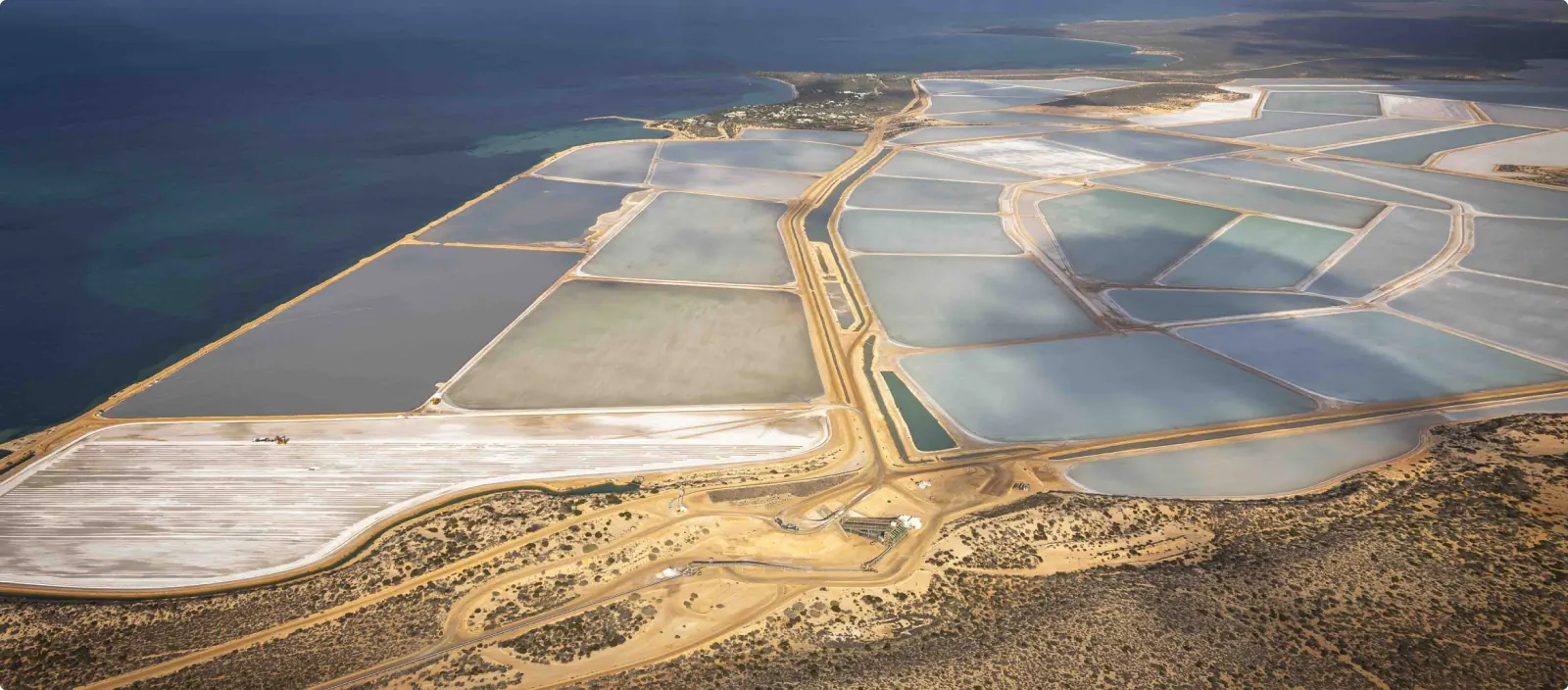
The best way to explain brine management is to walk through a project. This one is in development at a seawater desalination plant in Indonesia. The figures below are rounded from the project’s preliminary design basis and are subject to confirmation in detailed engineering. The client and the site are not named.
The starting point
A seawater desalination plant produces process water for an industrial site. Its reject brine, tens of thousands of cubic meters a day at roughly one and a half times the salinity of seawater, was the waste stream we were asked to look at.
Under conventional practice for coastal plants of this type, that reject stream is returned to the sea as concentrated saline effluent. Regulation in Indonesia and international practice are both moving toward stricter marine discharge limits and zero liquid discharge expectations for industrial effluent. Left alone, the stream is a growing liability. Handled well, it is a resource.
The design: recover the salt, then make chemicals from it
The project turns the reject brine into three industrial chemicals and a saleable mineral product, and returns nothing to the sea.
The brine leaves the desalination plant at about 5% salinity. Membrane electrolysis needs brine at roughly 30%, or 300 grams per liter. So the first stage is brine treatment, concentration, and salt recovery. The second stage is a set of modular chlor-alkali plants that use membrane cells to convert purified, concentrated brine into caustic soda, chlorine, and hydrogen, and then into products.
A series of identical modular plants is planned, built in phases. Each phase is a single building with several parallel process trains, each train carrying its own electrolyzer, transformer and rectifier, brine filtration and clarification, acid unit, and product storage. Because the block repeats, civil design, permitting, spares, and crew training are engineered once and reused.
What the plants produce and who uses it
Each plant makes three products: caustic soda solution at 50%, sodium hypochlorite solution at 15%, and hydrochloric acid at 33%. Those are the concentrations of the product solutions as shipped, not shares of output. At full development the site produces hundreds of thousands of tonnes of product a year.
None of these are specialty chemicals looking for a market. Caustic soda goes to alumina refining, pulp and paper, textiles, soap, and mineral processing. Sodium hypochlorite and caustic soda go to municipal and industrial water treatment. Hydrochloric acid goes to steel, metal finishing, and chemical manufacturing. Where a country imports part of its caustic soda, domestic production from a waste stream has a ready buyer. These are products with a proven return on investment in established worldwide markets.
The three product streams share storage and a common truck-loading corridor. The chlorine and hydrogen from electrolysis are consumed inside the plant making acid and hypochlorite. Nothing pressurized is stored or shipped. That was a permitting decision as much as a commercial one, and we explain why below.
How the brine is used across the whole site
The chlor-alkali plants only need part of the brine, roughly a third of it at full development. The rest supplies the recovery process, so no part of the stream is left unmanaged.
Salt recovery is where the design work concentrated. The conventional answer is a solar evaporation field, open evaporation ponds that depend on the weather. The alternative under evaluation is an enclosed thin-film evaporation and crystallization system inside air-supported domes designed for heavy rain and typhoon winds.
Inside the domes the brine flows down thin films along long channels stacked in tiers, in warm, dry air held by desiccant dehumidification. The desiccant is regenerated with recovered heat or natural gas. The films take the brine part of the way, crystallizers take it to about 30%, and mother liquor is recycled back into the loop. Saleable salt output depends on the recovery actually achieved, and it is confirmed only by a continuous commercial-scale performance test.
The recovered salt is graded for two markets: salt for the chlor-alkali plants and other industrial users, and, with separate refining and certification, food-grade mineral salt. Producing salt locally from a waste stream also reduces dependence on imported salt.
What the zero liquid discharge loop looks like
Dechlorinated process brine from the electrolyzers is not sent to the environment. It returns to the concentration loop for reuse as feedstock. Water is recovered for reuse in the process. Only purified products and solid salt streams leave the site. No salt is purchased; concentration is achieved by evaporation alone.
That is what zero liquid discharge means on this project, and it is defined stream by stream. Reject brine is inside the loop. Cooling blowdown, laboratory waste, and general site effluent are being confirmed as in scope or shown separately, because a zero discharge claim that quietly excludes three streams will not survive review.
What the regulator will ask about a brine recovery facility
Before a brine recovery facility goes to the environmental regulator, these are the items to prepare. Together they are the clearest picture of what brine permitting actually involves.
| Item | Why it matters to the regulator |
|---|---|
| Environmental permitting pathway | The plant needs its own environmental impact assessment or management plan under local rules, not references to standards from another country. |
| Chlorine gas safety and emergency response | Handling, off-gas treatment, leak detection, critical safety systems, and an evacuation plan. This is the first question a reviewer asks about a chlor-alkali plant. |
| Scope of the zero discharge claim | Sampling often covers the reject brine only. Other site effluents must be confirmed in scope or shown separately. |
| Evaporation pond footprint | A solar evaporation field for a large brine stream can be larger than the plant itself. Seepage, land use, and local ecology need their own review. |
| Energy source and carbon footprint | Grid electricity and gas are a common base case. Renewable options and waste heat reuse strengthen the case and may be required. |
| Local content and community benefit | Local hiring, training, and local contractor scope should be framed as commitments, not assumptions. |
| Before-and-after baseline | A plain comparison of current discharge and the post-project state makes the improvement easy to grasp. |
Every one of these is a permitting issue that an equipment proposal on its own does not answer and an owner rarely knows to ask about. Because we handle the permits alongside the engineering and construction, they are answered inside the same project. Together they are the critical review items for a brine facility of this kind. Finding them before the filing is the difference between a review and a rejection.
What it takes to run
A brine recovery facility is a chemical plant, and a chemical plant needs power, water, and people. Owners should see those numbers early.
On this project electricity is the largest operating input by far, followed by process water and demineralized water, and the full site needs operating, laboratory, and management staff on continuous shifts.
The technology package includes operator training at the reference plant before start-up, a performance guarantee on the electrolyzers, and remote monitoring and audit support. The plant is designed for a 25-year operating life.
Brine treatment and recovery technologies compared
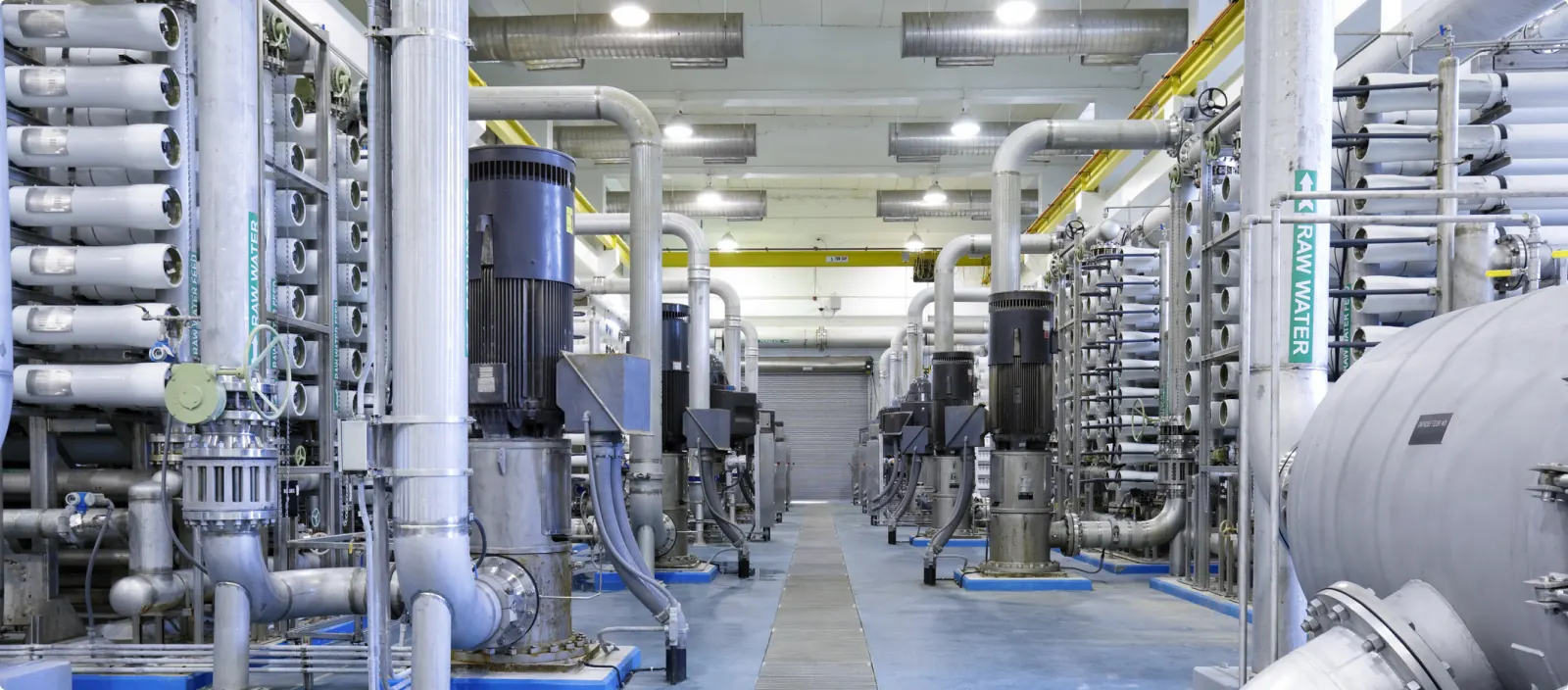
There is no shortage of brine treatment technologies and solutions on the market. Every brine project uses some combination of the same technologies: brine treatment to remove what would scale or foul, concentration to reduce volume, a thermal finish to solid salt, and, where the volume justifies it, a chemical plant to turn the salt into products. Here is how we think about each one, and where the permitting risk sits.
Brine treatment before recovery: the purification stage
Raw reject brines cannot go straight into a membrane concentrator or an electrolysis cell. The calcium, magnesium, sulfate, and silica in it would scale the membrane and poison the cell. So every recovery project starts with a brine treatment stage, and the design of that stage decides the operating cost of everything downstream.
On our project in Indonesia the primary brine treatment unit uses soda ash and caustic soda to precipitate calcium and magnesium, and barium chloride to precipitate sulfate. The solids come out as limestone, magnesium hydroxide, and barium sulfate, each in tens of tonnes a day, and each with its own market. A secondary treatment unit with ion exchange polishes the brine to the purity the membrane cells require. The treated brine, at 300 to 305 grams per liter, is then fed to the plants, and the recirculated brine returning from the cells at 180 to 200 grams per liter is re-saturated and sent round again.
Two points from that design apply to every brine treatment facility. First, the chemicals used for treatment can often be made on site: the plant produces its own caustic soda and hydrochloric acid, so it buys less and permits fewer deliveries. Second, the treatment solids are by-products, not waste, if the purity and the buyer are planned for. If they are not, they are a solid waste stream with its own disposal permit.
Concentration: solar ponds, vacuum salt, or enclosed evaporation
Getting seawater brines from 5% to 30% salinity is the largest energy and land decision in a recovery project. There are three ways to do it.
| Item | Solar salt ponds | Vacuum salt plant | Enclosed thin-film evaporation |
|---|---|---|---|
| Climate dependency | High | Low | Low |
| Production period | Seasonal | Year-round | Designed for year-round operation |
| Contamination exposure | Open system | Enclosed | Enclosed and controlled |
| Land use | Large horizontal ponds | Compact | Multi-tier vertical use |
| Quality consistency | Highly variable | High | Controllable |
| Expansion | More land | More units | Add modules |
| Energy | Sun | Steam and electricity | Recovered heat, natural gas, or solar, plus fans |
| Permitting concern | Pond footprint, seepage, land use, local ecology | Energy source, emissions | Structure approval, energy source |
Our view: open ponds look cheap until the environmental review of the pond itself begins. Enclosed solutions cost more up front and remove the weather, the contamination, and most of the land question. Evaporating a brine stream of that size on natural gas alone is unlikely to be economical, so we design around waste heat, solar heat, and phased operation from the start.
Membrane concentration and reverse osmosis recovery
Before any thermal step, membrane systems do the cheap work. High-recovery reverse osmosis, ultrafiltration in front of it, and electrodialysis can take dilute brines a long way toward concentrate at a fraction of the energy of evaporation. Membrane technologies now reach salinities that only evaporators could reach a decade ago.
The limit is scaling. Calcium, magnesium, sulfate, and silica come out of solution as concentration rises and foul the membrane. That is why the brine analysis comes first and why chemical softening, with lime, soda ash, or caustic, sits in front of the membrane stage on most industrial brines. Membrane recovery is where good treatment pays for itself, and where poor treatment shows up as membrane replacement costs.
Thermal: evaporators and crystallizers
Evaporators and crystallizers finish the job. Mechanical vapor recompression, multiple-effect evaporation, and forced-circulation crystallizers take the concentrate to solid salt and recovered water. These technologies are proven, they are energy-hungry, whether the heat comes from electricity or steam raised on natural gas, and they are the reason zero liquid discharge is expensive.
The design rule we follow is to let the membrane stage do as much of the volume reduction as the chemistry allows and to size the thermal stage for what is left. That hybrid of membrane and thermal treatment is what every recent successful zero liquid discharge facility we have studied has in common, whether it treats cooling tower blowdown at a petrochemical plant or flue gas desulfurization wastewater at a coal plant. Waste heat from the host plant, where it exists, changes the economics of the thermal stage more than any other single input.
Reuse: what comes back out of the brine
Water reuse is the word regulators and owners now share. On a resource recovery project it means four separate streams, and each one should be named in the water and solids balance. Resource recovery is the difference between a waste facility and a production facility in the eyes of most regulators.
Water reuse: the water recovered from concentration goes back into the process, or into the host plant, instead of being made fresh from seawater. Product reuse: recovered sodium chloride feeds the chlor-alkali cells and is sold to outside buyers. Brine reuse: dechlorinated brine from the cells goes back into the loop. Heat reuse: recovered heat from the host plant or the process regenerates the desiccant and preheats the feed. By-product reuse: the treatment solids go to buyers as mineral products instead of to a landfill.
Reuse is also what turns a permit conversation around. A file that shows all the waste streams reused, sold, or accounted for is reviewed differently from a file that shows a discharge with a treatment plant bolted on.
Mineral recovery from brines
Reject brines carry more than sodium chloride. Magnesium hydroxide, barium sulfate, and calcium carbonate all come out of the brine treatment stage as by-products with their own markets, and mineral recovery technologies are increasingly part of the business case rather than an afterthought. On our project in Indonesia the treatment stage produces magnesium hydroxide, barium sulfate, and limestone in tens of tonnes a day alongside the pure brine, and the recovered salt is itself sold as an industrial and mineral salt product.
Lithium recovery is the subject everyone asks about. Lithium, magnesium, and potassium are all present in seawater brines, and large desalination developers have begun designing selective processes that produce high-purity brine streams for critical mineral extraction as separate industrial feedstocks. Lithium from continental brines is an established industry with its own permitting record. Critical minerals policy in several countries now treats lithium, magnesium, and potassium from brines as a strategic resource, and that will bring incentives and scrutiny in equal measure.
Our position is more cautious than the headlines. Lithium recovery from seawater brines is not yet a route we would build a permit application around. Salt, caustic soda, acid, hypochlorite, and the magnesium and barium by-products are. If lithium is in your plans, we design the brine treatment so a selective lithium stage can be added later without rebuilding the front end.
Disposal routes when recovery does not pay
Not all brines are produced in volumes large enough or steady enough to support a recovery facility. When it is not, the choice is among ocean outfall, deep well injection, evaporation ponds, sewer disposal, and land application, each with its own permit and its own limits. Brine disposal is a permit question first and an engineering question second. We compare the routes in detail in our guide to brine disposal methods.
Permits and regulations for brine discharge and brine facilities

Brine management sits under two sets of rules at once, and a brine management plan has to satisfy both. One governs what leaves the site as liquid, the discharge and disposal side. The other governs the facility you build to treat or recover it. Both have to be mapped.
United States
Any discharge of brine to surface water in the United States needs a National Pollutant Discharge Elimination System permit under the Clean Water Act, issued by the Environmental Protection Agency or by a state agency the agency has authorized. The permit sets limits on salinity, temperature, chemical residuals, and other parameters, defines a mixing zone, and requires monitoring and reporting.
Disposal by injection into a deep well falls under the Underground Injection Control program, with its own well classes, construction standards, and permits. Discharge to a municipal sewer needs the treatment works’ consent and pretreatment limits. Evaporation ponds and land application are regulated by the state, and often by the county.
A recovery facility that makes caustic soda, acid, or hypochlorite is a chemical plant and is permitted as one: air permits, hazardous materials handling, process safety, and stormwater on top of the water permits. We expedite permits in states across the country from our office in Canton, Georgia, and we coordinate the federal, state, and local filings so they are sequenced and consistent. For the full detail on that side of our work see environmental compliance consulting.
Indonesia and Southeast Asia
Indonesia requires an environmental approval before a facility of this kind can be built. Larger or higher-risk projects go through a full environmental impact assessment, known as AMDAL. Smaller or lower-risk projects use the environmental management and monitoring plan, UKL-UPL. Which one applies, and what it must contain, depends on the scale, the location, and the activities on site, which is why we map it for the specific plant rather than relying on general references.
Two things stand out on Indonesian projects. The evaporation pond or evaporation field is treated as a facility in its own right, with its own review of seepage, land use, and local ecology. And local content requirements, known as TKDN, shape how the construction scope is split between the owner’s Indonesian contractors and the technology supplier.
Where zero liquid discharge is mandated
Zero liquid discharge started as an ideal and has become a rule in a growing number of places. India’s Central Pollution Control Board has made it mandatory for high-polluting sectors such as textiles and tanneries in several states. China has designated industrial zones where no liquid discharge is permitted. The Middle East applies it to specific industrial effluents in water-scarce areas.
Where it is mandated, the permit question shifts from “what are your discharge limits” to “prove nothing leaves.” That proof is a complete water and solids balance for the whole site, not one stream. We cover the standard in full on our zero liquid discharge page.
What the application file usually contains
Regulators in every jurisdiction we work in want to see the same core package, in their own format. From the technology side: a process flow diagram, piping and instrumentation diagrams, a general arrangement drawing, an equipment list, a power list, and a control philosophy. From the environmental side: the feed and brine analysis, a water balance and a mass balance showing all liquid and solid streams and where they go, the discharge or zero discharge case, an emergency response plan for any hazardous chemicals, and a before-and-after baseline.
We assemble that file, coordinate the studies, and manage the agency comments and responses. The owner signs it. The regulator gets a package that answers the questions in the order they will be asked.
Mistakes we see before companies call us
The pattern on brine management projects is consistent enough that we can list it.
Designing the plant before analyzing the brine
Owners size equipment from the desalination plant’s nameplate capacity and treat the brine chemistry as a detail. Then the laboratory report shows calcium, magnesium, sulfate, and silica at levels that change the pretreatment, the membrane recovery, and the product purity. The design is reworked, and the permit application with it. Get the analysis first.
Claiming zero liquid discharge too early
The phrase is attractive and reviewers know it. A zero discharge claim that covers reject brine but not cooling blowdown, laboratory waste, or site stormwater is a claim that fails on the first site visit. Define it stream by stream, and do not use the phrase until the balance is confirmed.
Choosing the product model without the safety case
A chlor-alkali plant can make caustic soda with acid and hypochlorite, or caustic soda with liquid chlorine and hydrogen. The second model produces more caustic and a saleable hydrogen stream. It is the critical decision in a chlor-alkali design. It also puts pressurized chlorine storage on site, which triggers a major-hazard safety case and becomes the dominant permitting risk in the project. It changes the distribution model too. On our project in Indonesia the first model was chosen, in part because the plant then makes its own acid and the permitting and hazard studies are simpler.
Forgetting the pond is a facility too
A solar evaporation field for a large brine stream can be larger than the chemical plant it feeds. Owners often treat it as land rather than as a facility. Regulators do not. Seepage control, groundwater, land use, and local ecology all need to be addressed, and the review can take as long as the plant’s.
Ignoring energy until the end
Concentrating brine is an energy problem dressed as a water problem. A design that evaporates the full stream on purchased natural gas will struggle on cost and on the carbon footprint question the regulator will raise. Recovered heat, solar heat, and phased operation belong in the concept, not in the value engineering afterward.
Underestimating what the site must provide
The technology supplier delivers skids, controls, training, and commissioning support. The owner provides land, civil works, buildings, power distribution, utility connections, storage, logistics, and permits. Remote monitoring alone needs a secure internet connection, a fixed address, a firewall, and a virtual private network. When that split is not written down at the start, the schedule slips at the interface.
What working with Permitting Plus looks like

Permitting Plus is based in Canton, Georgia. You can read about the firm on our about page. On brine management projects in the United States and worldwide, our role is project management, engineering, procurement, and construction, through to commissioning of the modular plant units, with our technology partner supplying the process technology. Our permitting services come in addition, so the owner has one team from “we have a brine problem” to a permitted plant in operation.
What we need from you first
Three things start every project. The feed water analysis: salinity, composition, and temperature. The brine flow, confirmed or estimated, with the basis stated. And a description of what leaves the site today, including the streams nobody usually mentions.
Helpful but not essential at the first meeting: site elevation, the electricity tariff, any waste heat on site, the land available, and the industrial customers within reach for salt and chemicals.
What you receive
A feasibility briefing built on your own numbers, with the current situation stated as confirmed or estimated. A route comparison across discharge, treatment and disposal, and recovery, with the treatment solutions that fit each. A regulatory map for your jurisdiction listing every approval, agency, study, and the order they must happen in. Engineering, procurement, and construction of the plant, using our technology partner’s modular technology, which is already in commercial operation. Project management with readiness reviews at each gate and the critical path marked, through to commissioning. And a list, like the one above, of what the regulator will ask that the technology proposal has not answered.
Frequently asked questions about brine management
Is brine hazardous?
Reject brine from seawater desalination is not classified as hazardous in most jurisdictions. It is regulated because of what it does to the receiving water: raised salinity, lower dissolved oxygen, and residual treatment chemicals. Process and mine brines can carry heavy metals or other contaminants that change that answer, which is another reason the analysis comes first.
Can brine be reused?
Yes, and increasingly it should be. Water can be recovered from it for reuse. Salt can be recovered from it. With a chlor-alkali stage, caustic soda, hydrochloric acid, and sodium hypochlorite can be made from it. Magnesium and barium by-products can be recovered during purification. Whether reuse pays depends on volume, steadiness, energy cost, and the distance to buyers. We explain the recovery solutions in our article on brine valorization.
How long does brine permitting take?
It depends on the route and the jurisdiction. A revision to an existing discharge permit can move in months. A new recovery facility with an environmental impact assessment, a chlorine safety case, and a pond review is a multi-year effort that has to run alongside engineering. On our project in Indonesia the engineering, construction, and commissioning program is about two years, and the environmental approvals are sequenced to keep pace with it.
What does brine management cost?
There is no useful single number. The drivers are the brine volume and water chemistry, the treatment technologies chosen, how far it must be concentrated, the energy source, the land available, the disposal or recovery route, and the studies the regulator requires. What we can do early is put the routes side by side with their capital, operating, and permitting profiles so the owner can see where the money goes before committing to a design.
What are the limits on brine discharge?
Limits are set permit by permit. They usually cover salinity at the edge of a mixing zone, temperature, pH, residual chlorine and other treatment chemicals, and monitoring frequency. Some jurisdictions add dispersion modeling and whole-effluent toxicity testing. We go through the discharge routes and their permits in our guide to brine disposal methods, the pond option in our guide to evaporation ponds, and the desalination side on our desalination page.
Talk to us about your brine
Whether your brines come from a desalination plant, a mineral processing operation, or industrial water systems, the questions are the same: what is in the streams, where can they legally go, which technologies can recover value from them, and which approvals sit on the critical path. Good brine management answers all four before the first drawing is issued, and treats the brine as a resource rather than a waste.
If your plant makes brine, or will, the time to plan for it is before the design is fixed. Send us the analysis and the flow, and we will tell you which routes are open to you, what the regulator will ask, and how long it will take.
Call (470) 714-8564 or request a consultation. Permitting Plus, 8014 Cumming Highway, Suite 403, Office 288, Canton, Georgia 30115.
Articles on brine management
Three guides that go deeper into the routes, the ponds, and the recovery side of brine management.
Ocean outfall, injection wells, evaporation ponds and sewer discharge compared: what each method costs, needs and how it is permitted.
How brine evaporation ponds work, liner types, when regulators permit them, and when an enclosed alternative is the better choice.
Turning reject brine into salt, caustic soda and acid: what it takes to engineer, permit and sell the products.