
Evaporation Ponds for Brine: How They Work, When They Are Permitted, and the Enclosed Alternative
By Sean Alford, Permitting Plus
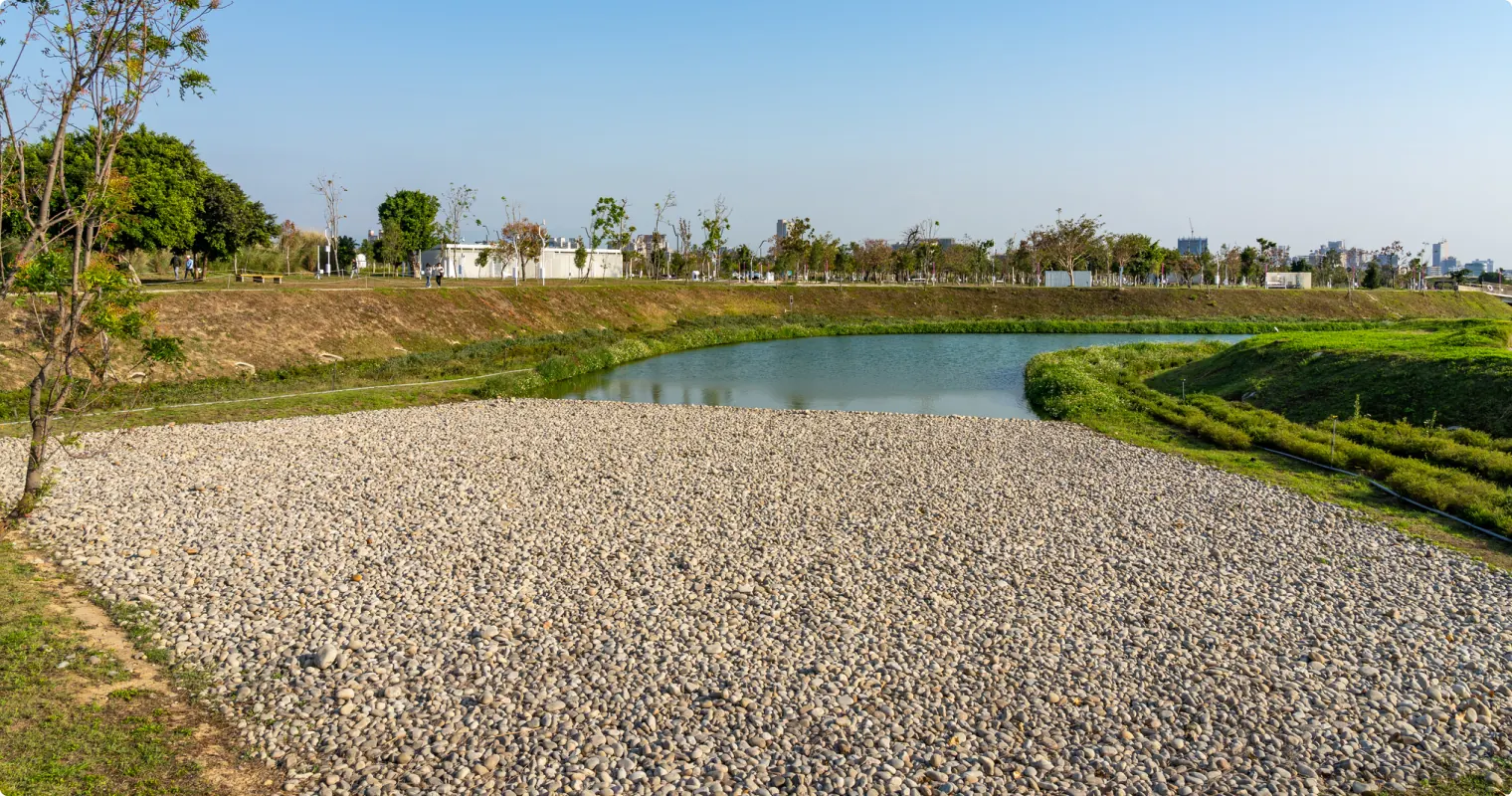
An evaporation pond is the simplest way to get rid of brine. You pump it into a lined, shallow basin and let the sun and wind take the water away, leaving the solids behind. No energy bill, no moving parts, no outfall.
That simplicity is why so many desalination plants, industrial water users, and mining operations start with ponds. It is also why so many of them get into trouble with the regulator. A pond is a facility. It has to be designed, lined, permitted, monitored, and eventually closed, and its footprint is often larger than the plant that feeds it.
Permitting Plus provides project management, engineering, procurement, and construction for brine management projects in the United States and worldwide, together with the permits they need. Evaporation ponds come up on almost every project, and on our project in Indonesia we have compared open ponds directly against enclosed evaporation as part of brine management for a large seawater desalination site. This article covers what we have learned.
Table of Contents
How an evaporation pond works
Evaporation ponds are the oldest form of wastewater treatment there is. The physics is plain. Water evaporates from the surface of the pond. Dissolved solids do not. Over time the contents of the pond concentrate until salt crystallizes and settles, and the pond is either harvested or, at the end of its life, closed with the contents inside.
Everything about pond performance comes down to the evaporation rate, which sets the water loss per square meter per year. That rate depends on solar radiation, air temperature, wind, humidity, and the salinity of the water itself. Saline water evaporates more slowly than fresh water, and the more concentrated the brine gets, the slower the water loss. A pond that works well in a dry desert climate can fail in a wet tropical one because rainfall adds water faster than the sun removes it.
Sizing a pond
The pond has to be large enough that the annual water loss to evaporation exceeds the annual inflow plus rainfall, with a margin for wet years. Designers use the local net evaporation rate, the daily brine or wastewater volume, and the target depth to arrive at a surface area. Net evaporation is gross water loss minus rainfall, and in a monsoon climate it can be almost nothing for months. The result is almost always bigger than the owner expected.
A reference point from our project in Indonesia: for a seawater reverse osmosis plant producing tens of thousands of cubic meters of reject brine a day, the open solar pond option needed well over ten hectares of ponds, more land than the chemical plant the recovered product would feed.
Liners and seepage
The liner is the part of the pond the regulator cares about most, because it is what separates the pond water from the groundwater. Unlined or poorly lined ponds leak, and brine that leaks reaches groundwater. Modern ponds use a synthetic liner, usually high-density polyethylene or a similar geomembrane, often over a compacted clay layer, sometimes with a leak detection layer between two liners.
Liner selection, seam testing, and a leak detection system are design decisions, but they are also permit conditions. The application has to show what the liner is, how it was installed and tested, and how seepage will be detected during operation.
Liner types and how they are chosen. Pond liners come in a handful of types, and the regulator will ask why you chose yours. High-density polyethylene is the most common liner for brine ponds because it resists salt, acids, and ultraviolet light and welds into large sheets with testable seams. Linear low-density polyethylene liners are more flexible and suit ponds with uneven subgrades. Reinforced polypropylene liners handle wide temperature swings and are often used where a pond will be emptied and refilled. Geosynthetic clay liners, a layer of bentonite between two geotextiles, are used as the secondary liner under a polyethylene primary liner in a double-liner system. The liner type is matched to the water chemistry, the climate, the expected life of the pond, and the leak detection design. For most industrial applications a single high-density polyethylene liner over compacted clay satisfies the regulator; for a feed with heavy metals, or a pond over a drinking water aquifer, a double liner with leak detection between the two liners is the usual condition. Liner thickness, seam testing, and the installer’s field quality control records all go in the permit file, and liners that cannot be documented are liners the regulator will not accept.
When an evaporation pond needs a permit
In most jurisdictions the answer is always. Wastewater treatment facilities are permitted whether or not water leaves them. A pond holding brine or industrial wastewater is a wastewater treatment or disposal facility, and it is regulated as one, alongside sewage lagoons and other wastewater facilities.
In the United States, the state environmental agency is normally the permitting authority. Ponds are typically permitted as no-discharge wastewater treatment facilities, with conditions covering the liner, freeboard to prevent overtopping in storms, groundwater monitoring wells around the pond, stormwater separation, and a closure plan for the salt and the liner at the end of life. Where the pond could affect surface water, a federal discharge permit question arises too. Local zoning and land use approvals sit on top, as they do for any industrial treatment facilities.
Outside the United States the structure is similar. On our project in Indonesia, the evaporation pond option needs its own environmental review covering seepage, land use, and local ecology, separate from the review of the process plant.
What the application usually has to show
The pond design with dimensions, depth, and freeboard. The water balance: inflow, rainfall, evaporation loss, seepage loss, and the margin for wet years. The liner system and its testing. The groundwater monitoring plan. Stormwater controls. The plan for salt harvest or final closure. And an assessment of the land taken and the ecology around it, including birds and wildlife that will be drawn to open water.
Where evaporation ponds fit, and where they do not
Ponds fit small to medium volumes of most types of concentrate and wastewater in dry climates where land is cheap and groundwater is not at risk. Inland industrial plants in arid regions, mining operations with space, and small desalination units in the right climate are the typical applications.
They do not fit large volumes, wet climates, expensive land, or sites near sensitive groundwater. They also do not fit anyone who needs consistent salt quality, because an open pond collects dust, rain, and whatever the wind brings.
Applications in oil and gas and mining. The largest users of evaporation ponds are not desalination plants. Oil and gas producers use them for produced water, the salty water that comes up the well with the oil and gas, especially in dry basins where injection wells are full or far away. Mining operations use them for process water, tailings water, and the concentrate from lithium and potash extraction, where the pond is also the production step: lithium brine in South America is concentrated under the sun for a year or more before the salts are harvested. Agricultural drainage water with a high salt content is held in evaporation basins in parts of the western United States. The applications differ, but the pond types are the same: lined, shallow, sized from net evaporation, and permitted as a wastewater facility. What changes with the application is the chemistry. Oil field produced water carries hydrocarbons and sometimes naturally occurring radioactive material, which brings air and solid waste rules into the pond permit. Mining water can carry metals and reagents. In each case the pond area, the liner types, and the monitoring are set by what is in the water, and the surface area is checked against the net evaporation rate for the site in the same way as for a desalination concentrate pond.
| Question | Pond works | Pond struggles |
|---|---|---|
| Climate | Dry, hot, windy | Wet season, high humidity |
| Volume | Small to medium | Tens of thousands of cubic meters a day |
| Land | Cheap and available | Expensive or constrained |
| Groundwater | Deep or already saline | Shallow, used for supply |
| Product | Not needed, or low grade acceptable | Consistent industrial or food-grade product needed |
| Neighbors | Remote | Communities, tourism, protected habitat nearby |
The enclosed alternative
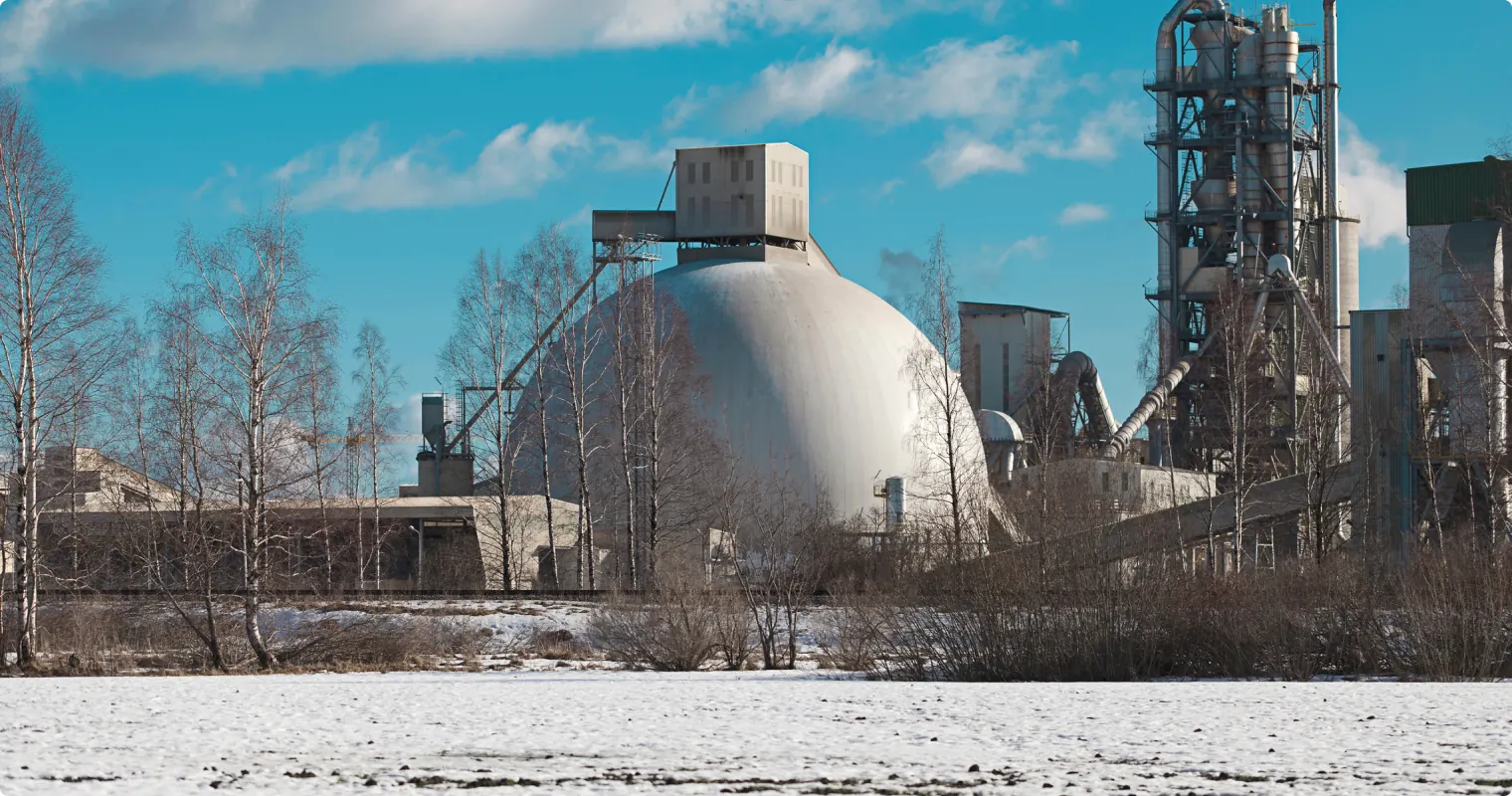
On our project in Indonesia the conventional open solar pond was compared against an enclosed thin-film evaporation system: brine flowing as a thin film down long channels stacked in tiers inside air-supported domes, in warm, dry air held by desiccant dehumidification, with heat recovery shared between the domes. The films take the brine part of the way, and crystallizers finish the job at about 30%.
The comparison came out like this.
| Comparison item | Open solar pond | Enclosed thin-film evaporation |
|---|---|---|
| Climate dependency | High | Low |
| Production period | Seasonal | Designed for year-round operation |
| Contamination exposure | Open system | Enclosed and controlled |
| Land use | Large horizontal footprint | Multi-tier vertical use |
| Product quality | Highly variable | Controllable |
| Expansion | More land | Add modules |
| Energy | Sun only | Recovered heat, natural gas, or solar, plus fans |
| Environmental review | Seepage, groundwater, land, ecology | Structure, energy source |
The enclosed system costs more to build and it uses energy. Its case rests on year-round output, consistent product quality, a footprint a fraction of the pond’s, and a much shorter environmental review. Whether that trade pays depends on the site, and we run the numbers both ways before recommending either.
One caution from that work: evaporating a very large volume on purchased natural gas alone is unlikely to be economical. Recovered waste heat from the host plant, solar heat, natural gas only as a backup, and phased operation belong in the concept from the beginning.
Evaporation ponds as part of a water treatment system
A pond rarely stands alone. At most industrial plants and wastewater facilities it is the last step in a chain of water treatment systems: pretreatment, reverse osmosis or another separation step, sometimes a membrane concentrator, and then the pond for what is left. The smaller the volume reaching the pond, the smaller the pond and the smaller the water loss to the atmosphere.
That is why the pond should be sized last, not first. Every improvement in recovery upstream shrinks the pond, and on large desalination plants and industrial wastewater facilities the upstream treatment systems are usually where the money is best spent. Membrane systems and evaporator systems cost money to run; the pond costs land. Sizing the two together is a water treatment decision, not a civil works decision. Natural evaporation is free, but the land and the review are not.
Ponds and zero liquid discharge
An evaporation pond is, technically, a zero liquid discharge facility: no liquid leaves it. Regulators do not always see it that way, because seepage is a discharge to groundwater and an overtopping pond is a discharge to surface water. If your plan depends on describing the pond as zero liquid discharge, the liner, the leak detection, and the freeboard have to prove it. We cover the standard itself on our zero liquid discharge page.
Mechanical evaporators instead of ponds
Where land or climate rules ponds out, mechanical evaporators do the same job in a building. Mechanical vapor recompression and multiple-effect evaporators take brine to concentrate or to solid salt using electricity or steam. These are treatment systems in their own right, with their own permits for air emissions and energy use, and they sit inside the plant’s water treatment facilities rather than out on the land. They cost more to run than a pond costs to own, and they need skilled operation, but they work in any climate and take up a fraction of the space.
The usual design puts membranes first, to do as much of the volume reduction as the chemistry allows, and sizes the evaporators only for what is left. We explain the other end of that decision in our guide to brine disposal methods.
Mistakes we see with evaporation ponds
Treating the pond as land rather than as one of the plant’s wastewater treatment facilities. It gets designed after the plant, sized from a guess, and permitted last, when its review can take as long as the plant’s.
Using an average evaporation rate. Wet years and the wet season decide whether a pond overtops. Water loss in the wet season, measured in the field rather than taken from a regional average, is the number that matters. Design for the bad year.
Ignoring what the pond attracts. Open salt water draws birds and wildlife, and in some regions that alone triggers a habitat assessment.
Forgetting closure. The contents and the liner do not disappear at the end of the plant’s life. The closure plan is part of the permit and part of the cost.
Skipping the product question. If the salt could be sold, an open pond may be the wrong tool, because the product it makes is inconsistent. That question belongs in our article on brine valorization.
Frequently asked questions
How much land does an evaporation pond need?
It depends on the volume, the local net evaporation rate, and the margin for wet years. Small industrial ponds have a surface area of a fraction of a hectare. For a seawater desalination brine stream of tens of thousands of cubic meters a day, the open pond option on our project in Indonesia came out at well over ten hectares.
Do evaporation ponds pollute groundwater?
Unlined or failed ponds do. Ponds with properly installed liners, leak detection, and monitoring wells are designed not to, and proving that is the core of the permit. Seepage loss should be negligible on a lined pond; if the water balance shows more loss than evaporation can explain, the liner is leaking, and field monitoring should show where.
Can you use an evaporation pond for sewage or other wastewater?
Sewage lagoons and industrial wastewater ponds are other applications of the same principle, and they are regulated the same way. Sewage ponds add biological treatment to the evaporation and are usually part of a larger wastewater treatment plant. The permit conditions on liners, freeboard, and monitoring are similar whether the contents are sewage, industrial wastewater, or brine, and the water loss calculation is the same.
Are evaporation ponds cheaper than evaporators?
In most applications, yes, to build and to run, if the land is cheap and the climate cooperates. Ponds have no energy cost; evaporator systems do. Once you add the land, the liner system, monitoring, closure, and the risk of a wet year, the gap narrows. In a wet climate or on expensive land the enclosed or mechanical option often wins.
In short
An evaporation pond is a wastewater treatment facility with a liner, a permit, a monitoring program, and a closure plan, not an empty field. It works for modest volumes in dry climates with cheap land and safe groundwater. For large volumes, wet climates, or a saleable salt product, enclosed evaporation or mechanical evaporators usually make more sense, and their environmental review is shorter.
If you are weighing ponds against the alternatives, send us your brine volume, your site, and your climate data, and we will tell you which route the regulator is likely to accept. Call (470) 714-8564 or request a consultation. Our brine management page explains the full process.
Talk to us about your brine
Send us the analysis and the flow, and we will tell you which routes are open to you, what the regulator will ask, and how long it will take.